
Flat Vs Jumps Racing: Two Sports, Two Betting Realities
 Available in US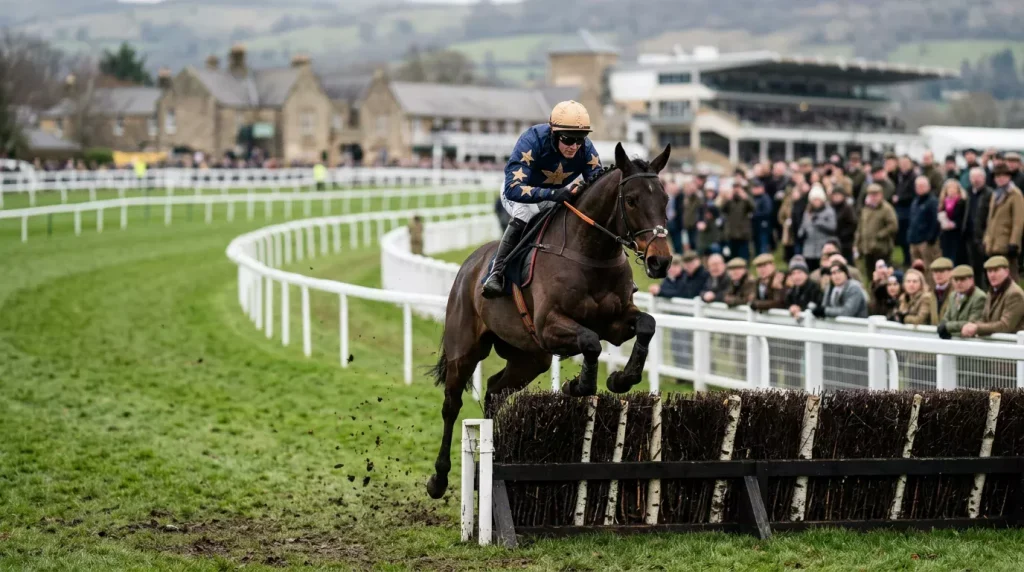
The Same Sport On Paper, Different Games In Practice
I spent my first two years betting almost exclusively on the Flat. Short races, fast horses, summer evenings, data-rich form lines – it suited my temperament. Then a friend dragged me to Sandown on a December afternoon for a novice chase card. Watching a horse clear a fence at 30 miles an hour while carrying 11 stone and a jockey who was visibly praying – that was a different kind of sport entirely. The betting was different too. Not better, not worse, but structurally different in ways that change how you approach every race.
The two codes – Flat racing and National Hunt (jumps) – share a governing body, a handicapping system, and a betting infrastructure. But the similarities are thinner than they look. The seasons barely overlap, the horse profiles diverge, the form dynamics differ, and the risk profile of every race is fundamentally altered by obstacles. Understanding those differences isn’t optional if you bet on both codes. It’s essential.
Flat Vs Jumps Racing — More on this topic at horse racing betting how to .
The Two Codes
Flat racing is straightforward in concept: horses race on a level track without obstacles, over distances from five furlongs (1,000 metres) to two miles six furlongs. Speed and acceleration dominate at shorter trips; stamina becomes more important beyond a mile and a half. Flat horses are typically younger – many start racing as two-year-olds – and careers are shorter, with the best often retiring to stud before they turn five.
National Hunt racing involves jumping obstacles – hurdles (smaller, brush-topped) or fences (larger, birch-built steeplechase obstacles). Distances start at two miles and stretch beyond four miles for the extreme staying races. Horses tend to be older, stronger, and more robust. A jumps horse might not race competitively until age five and could still be running at twelve. The athleticism required is different: not just speed and stamina, but jumping technique, courage, and the ability to sustain effort over 20 or 30 obstacles.
Record prize money of £194.7 million was distributed across British racing in 2025, and the split between codes reflects their different economies. The Flat attracts higher individual purses at the top end – Group 1 contests routinely offer six-figure sums – while National Hunt’s headline events like the Cheltenham Gold Cup and Grand National generate unmatched public engagement and betting turnover.
Seasons And Calendar
The Flat season on turf runs roughly from April to November. The all-weather circuit operates year-round, filling the winter months with Flat racing at six dedicated tracks. The core Flat season peaks during the summer festivals: the Derby at Epsom in June, Royal Ascot in June, Glorious Goodwood in July and August, and the final Classic at Doncaster in September.
National Hunt’s season mirrors the opposite arc. It begins building in October, peaks through the winter, climaxes at the Cheltenham Festival in March and the Grand National at Aintree in April, and then fades into a quiet summer. Some jumps racing continues through the summer at a handful of tracks, but the quality drops and the fields thin.
For punters, this seasonal rhythm creates natural transition points. The switch from Flat to jumps in late autumn is one of the trickiest periods – form references are stale, horses are reappearing after breaks, and the betting market is less efficient because casual punters haven’t re-engaged yet. These transitional windows are some of the best opportunities of the year for anyone willing to do the early-season form work.
Betting Rhythm
Flat betting is faster, more data-driven, and more liquid. Races are short – a five-furlong sprint lasts 55 seconds – and the absence of obstacles means the form is more predictable. A horse’s speed figure, draw advantage, and pace position matter enormously, and all three can be quantified. Exchange markets on big Flat races are deep, with thousands available at most prices, and the market moves are often sharp and efficient.
Jumps betting is slower, more narrative-driven, and shaped by attrition. A three-mile chase can last four minutes, and anything can happen during those four minutes: a loose horse, a blunder at a fence, a jockey misjudging the pace. The unpredictability premium is built into the prices. Favourites win less frequently over jumps than on the Flat, and the volatility of results rewards punters who manage their stakes conservatively and accept that variance is part of the code.
In-play betting illustrates the difference clearly. On the Flat, in-play markets are essentially pre-race markets with seconds of live data – the race is over too quickly for meaningful adjustment. Over jumps, in-play markets fluctuate continuously as horses jump, make mistakes, or lose position. The exchange is a different beast entirely during a live jumps race, and the skills required to profit from it have almost no overlap with Flat in-play.
See also All-Weather Racing .
Field Size Differences
Field sizes shape the betting market directly. More runners means a wider spread of prices, more each-way opportunities, and more complex race dynamics. Fewer runners compresses the market and makes each horse’s chance easier to assess – which should, in theory, reduce value.
In 2025, Flat races averaged 8.9 runners per race while jumps averaged 7.84. Both figures are down from the previous year, and the gap between codes has narrowed. But the headline numbers hide a useful distinction: premier jump fixtures actually saw field sizes grow, with average runners rising from 9.29 to 9.63 at the top meetings. Core jump fixtures remained lower, averaging around 7.9.
The practical implication is that the big jumps festivals – Cheltenham, Aintree, the Christmas fixtures – now offer field sizes comparable to or larger than most Flat cards. These are the races where each-way betting, handicap strategy, and market inefficiency come alive. The quieter midweek jump meetings, with six or seven runners per race, suit a different approach: class analysis and win-only betting tend to outperform in small fields where place terms offer minimal value.
Prize Money And Quality
The Flat attracts international investment at the top level. Owners from the Middle East, America, and Asia pour money into bloodstock, and that investment flows down through training fees, prize money, and the quality of competition. A Group 1 on the Flat might feature the offspring of stallions who stand for six-figure covering fees. The depth of talent at the top of Flat racing is unmatched in the sport.
Jumps racing operates on a different economic model. Horses are typically less expensive to buy, training fees reflect the longer campaigns and higher injury risk, and the ownership culture is more domestically rooted. Prize money is lower per race, but the emotional engagement is arguably higher – following a favourite horse through a six-month campaign, watching it develop over fences, cheering it through the Cheltenham Festival – that journey creates a connection that Flat racing’s rapid turnover rarely matches.
For betting purposes, what matters is not which code is “better” but which code suits your approach. If you thrive on data, speed figures, and pattern recognition, the Flat is your natural home. If you value narrative, patience, and the ability to read a horse’s jumping technique and stamina reserves, jumps racing offers a lifetime of learning. Most serious punters end up betting on both – but rarely in the same way.
Articles



Created by the "Furlongcraft" editorial team.
