
UK Racecourses From A Betting Perspective: Where The Price Lives Track By Track
 Available in US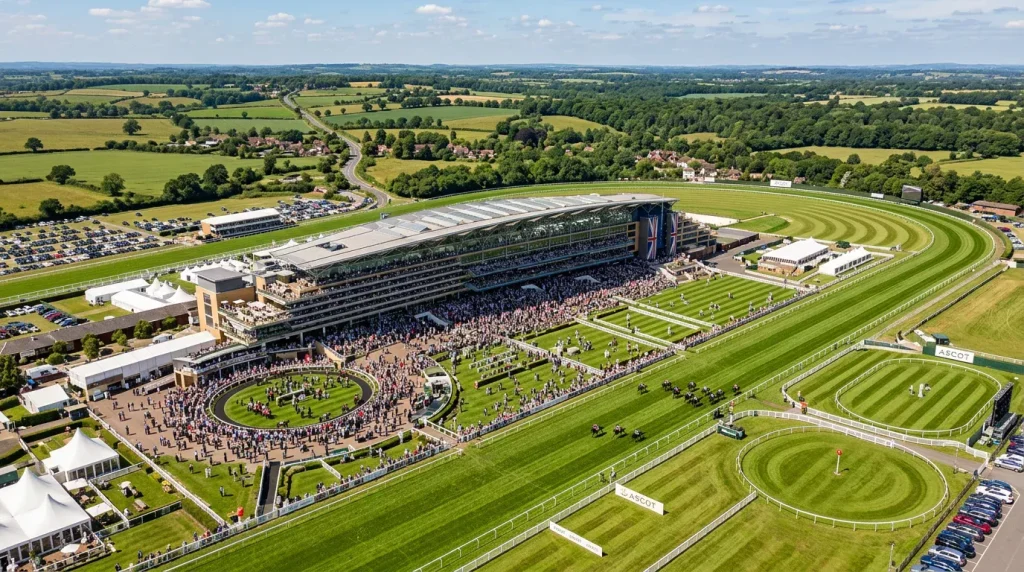
The first time I walked into the betting ring at York’s Ebor meeting, I genuinely did not know what I was looking at. A row of men and women standing on stools, chalking numbers on boards, shouting prices into a crowd that seemed to know exactly what to do. I stood there for ten minutes before I placed a bet, and the price I took was two points better than what my phone showed. That moment changed how I think about racecourse betting. The track is not just a venue for watching horses run. It is a separate market with its own pricing, its own rules, and its own edges – if you know where to look.
UK Racecourses From A Betting Perspective — More on this topic at horse racing betting how to .
Types Of UK Tracks And What They Mean For Markets
Britain has roughly 60 racecourses, spread from Musselburgh in Scotland to Newton Abbot in Devon, and they are not interchangeable. The type of track shapes the racing, and the racing shapes the betting. Flat courses – Newmarket, Ascot, Goodwood, Doncaster – tend to run during the warmer months and attract larger, more competitive fields. National Hunt courses – Cheltenham, Aintree, Kempton, Haydock – host jumps racing through the autumn and winter, with smaller fields and higher attrition.
Dual-purpose tracks like Sandown, Newbury, and York stage both codes, switching between flat and jumps depending on the season. Then there are the all-weather venues – Lingfield, Wolverhampton, Southwell, Newcastle, Chelmsford – which race year-round on artificial surfaces and provide the bread-and-butter programme that fills midweek cards. Each type attracts a different quality of horse, a different density of betting money, and a different kind of market. A Class 2 handicap at Ascot and a Class 5 handicap at Wolverhampton are both horse races, but they operate in different betting universes.
The On-Course Betting Ring
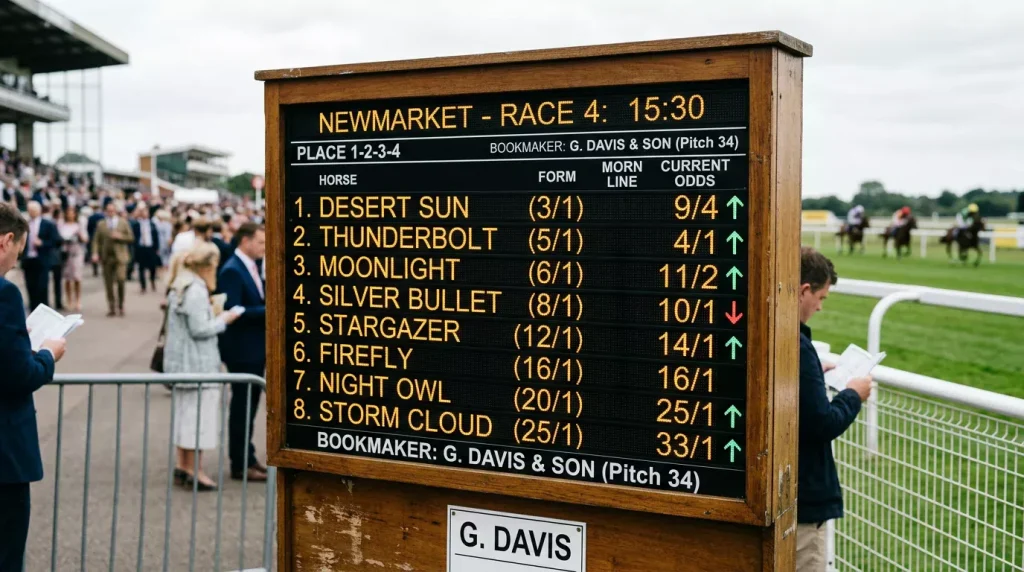
Walk into any major meeting and you will find the betting ring – sometimes called Tattersalls, sometimes the Tatts enclosure – where on-course bookmakers stand behind their boards and trade prices in real time. The ring is one of the last open-outcry markets in British finance, and it operates on principles older than the stock exchange. Bookmakers set their own prices based on their own book. If too much money comes for one horse, they shorten it and push others out. If money dries up on a runner, they drift the price to attract action.
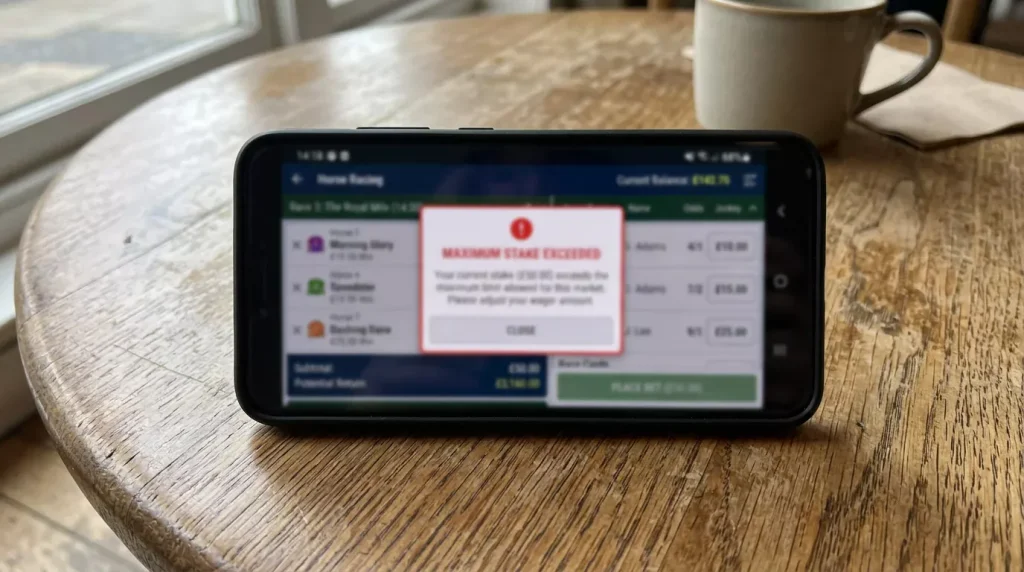
What makes this interesting from a betting perspective is that ring prices often diverge from the odds on your app. On-course bookmakers do not have the same overheads as online operators – no platform costs, no marketing budgets, no affordability-check compliance teams – and they set prices to balance their own book, not an algorithm’s. I have taken prices in the ring at Cheltenham that were a full point bigger than anything available online, simply because the on-course layers had not yet seen the same weight of money. The reverse happens too. Sometimes the ring tightens a price before the online market moves. The information flows both ways, but there is always a lag, and in that lag lives opportunity.
Rails bookmakers, who stand at the front of the ring closest to the course, tend to deal in larger stakes and tighter margins. They cater to professional punters and the so-called “faces” who move the market. Tatts bookmakers, further back, deal in smaller amounts and often offer wider prices. For a recreational punter, the Tatts ring at a mid-tier meeting like Newbury or Haydock is where you find the best combination of availability and price.
Tracks Where The Bias Is Worth Knowing
Every racecourse has quirks, and some of those quirks are bankable. Chester is a tight, left-handed oval where low draws on the flat have a significant statistical advantage – starting in stalls 1, 2, or 3 outperforms on many race types. Beverley’s uphill finish penalises front-runners who go too hard early. Sandown’s fences, particularly the Pond Fence on the downhill run, catch out novice chasers at an unusually high rate. Cheltenham’s Old Course favours horses that can handle undulating ground and a stiff uphill finish, while the New Course is flatter and often suits a different type.
These biases are well-documented, but they remain underpriced in the market more often than you would expect. Bookmakers compile their tissue prices – their opening odds – using form and ratings, not course-specific geometry. A horse with a perfect draw at Chester might open at 5/1 when the draw advantage alone should shorten it to 4/1. Knowing which tracks carry which biases is not a silver bullet, but it is a consistent edge that compounds over time. I keep a notebook of course notes – draw stats, going preferences by track, ground conditions that recur at certain times of year – and revisit it before every card at a track I know well.
See also Bankroll Management For Horse Racing .
Attendance, Atmosphere, And How They Shape Markets
Racecourse attendance in the UK crossed 5.031 million in 2025 – the first time the figure topped five million since before the pandemic. Under-18 attendance was up 17% year-on-year to 211,447, which suggests the audience is getting younger, not older. Those numbers matter for betting because attendance drives liquidity. A well-attended meeting means more money in the ring, tighter spreads between on-course and online prices, and better each-way terms at the big festival meetings where operators compete for footfall.
The atmosphere also shapes how you bet. It is harder to maintain discipline in a packed Cheltenham roar than in your living room with a cup of tea. I have watched sharp punters – people who would never chase a loss online – throw an extra £50 at the last race of Gold Cup day because the crowd was electric and the beer was flowing. If you go to the track to bet seriously, set your stakes before you arrive, write them down, and treat the atmosphere as entertainment, not information.
A First Visit Checklist For The Betting-Minded
If you have never been racing, start at a mid-tier meeting rather than a festival. Somewhere like Haydock, Newbury, or York on a Saturday card – big enough to have a proper ring, small enough that you will not feel overwhelmed. Arrive early, before the first race, and spend twenty minutes watching the ring operate. Note how prices move. Pick a bookmaker who is calling prices clearly and whose board is easy to read. Place a small bet – £5 or £10 – just to experience the transaction.
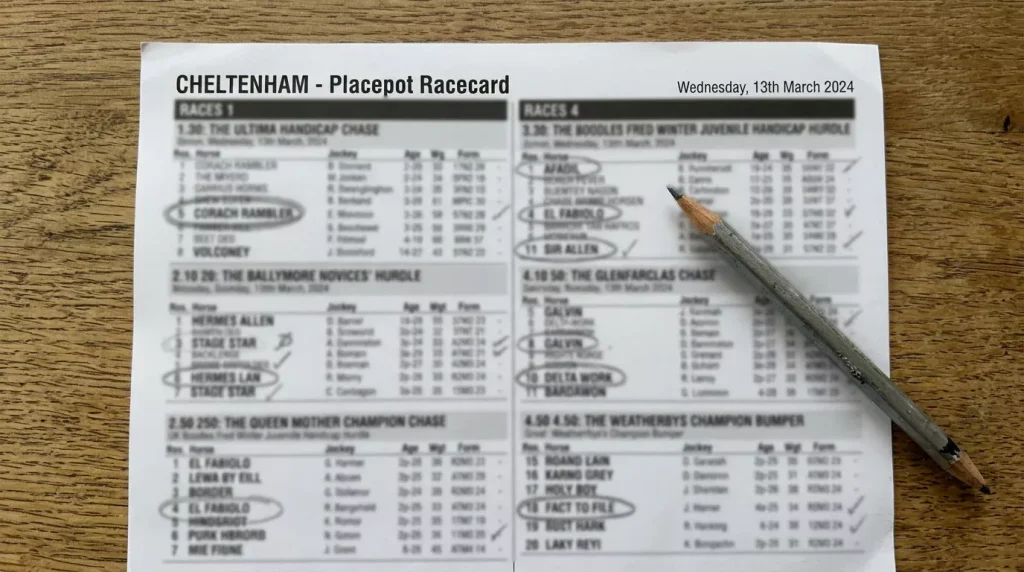
Bring cash. Many on-course bookmakers still prefer it, and some only accept it. Check the racecard for draw data if it is a flat meeting, and check the going report if it is jumps. Compare the ring price with your app before you commit. If the ring is better, take it there. If your app is better, bet on your phone. There is no loyalty obligation – the ring and the app are two channels for the same product, and rational punters use whichever one is offering more value in the moment. The track is not a museum piece. It is a live market that still produces edges for anyone paying attention.
Articles

Published by the Furlongcraft team.
