
In-Play Horse Racing Betting: A Short Window, A Few Real Edges
 Available in US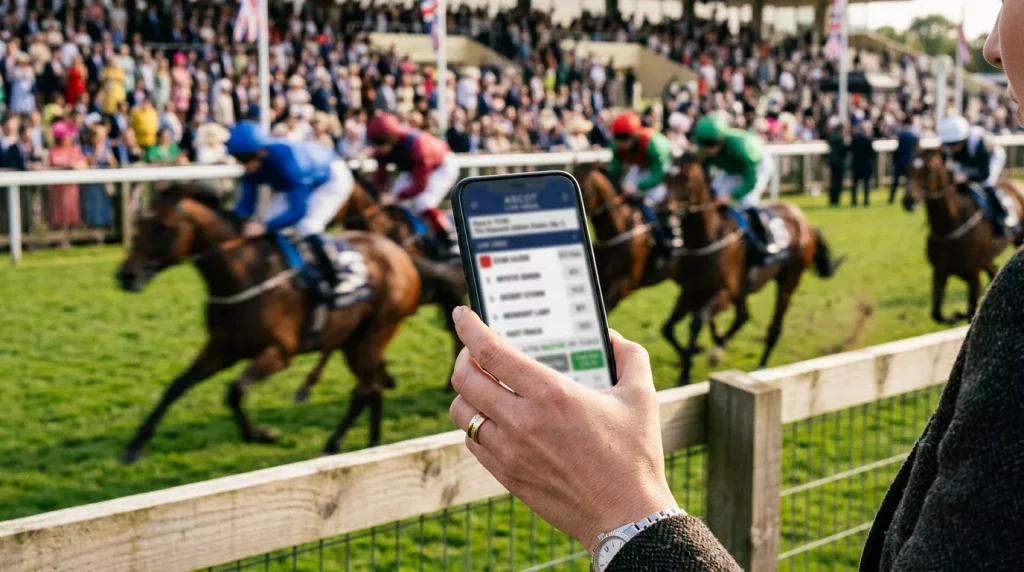
Sixty Seconds That Change Everything
The first time I placed an in-play bet on a horse race, the race was already over by the time I’d figured out which button to press. That’s not an exaggeration – a five-furlong sprint at Haydock lasts barely a minute. By the time I found the market, confirmed my stake, and hit submit, the leader had crossed the line. In-play horse racing betting is the most time-compressed form of live betting in any sport, and treating it like football in-play is a fast route to an empty account.
The window for in-play betting on horse racing ranges from about 55 seconds for a short sprint to five minutes for a marathon four-mile chase. Within that window, prices swing violently, markets suspend and reopen, and the information advantage shifts from data to visual observation. It’s a different discipline entirely from pre-race analysis, and the punters who profit from it bring skills that can’t be found in a form book.
In-Play Horse Racing Betting — More on this topic at horse racing betting how to .
How In-Play Runs
When a horse race goes off, the pre-race exchange market closes and the in-play market opens. Bookmakers handle this differently – some offer in-play on horse racing with a time delay (typically five to ten seconds), while exchanges match bets in real time. The delay exists because horse racing happens so fast that anyone watching a live stream has a material information advantage over someone relying on data feeds.
In-play markets on horse racing are almost exclusively exchange territory. Most traditional bookmakers restrict in-play horse racing to cash-out functionality rather than new bet placement, precisely because the speed of the event makes it nearly impossible for their traders to manage prices in real time. The exchange model works because both sides of the bet – backer and layer – face the same information delay, and the market self-corrects as the race unfolds.
Among 18-34 year-old online gamblers, 75% use smartphones as their primary device. That demographic is the most active in-play cohort, and the apps they use have transformed in-play from a niche exchange activity into a mainstream feature – though the sophistication of the user hasn’t necessarily kept pace with the technology.
Market Suspensions
One of the most disorienting aspects of in-play horse racing is the suspension. When a horse falls, refuses, or when the race situation becomes too volatile for the market to price accurately, the exchange suspends trading. During a suspension, no bets can be matched. The market reopens once the situation stabilises, often at dramatically different prices.
Over jumps, suspensions happen regularly. A fall at the second-last fence in a chase can suspend the market for several seconds, and when it reopens, the fallen horse’s odds will have gone to 1000 (or been removed) while the remaining runners’ prices compress accordingly. The information advantage in these moments belongs to whoever is watching the race live with the least possible delay – satellite television typically leads internet streams by two to four seconds.
On the Flat, suspensions are rare because the races are shorter and incidents like falls don’t occur. But the market can still become effectively untraded during a sprint if the result is obvious – when the leader opens up five lengths with a furlong to run, nobody is offering lay odds, and the market dries up naturally.
Cash-Out Mechanics
Cash-out is the consumer-facing version of in-play trading, and it’s the feature most recreational punters interact with. When you cash out, the bookmaker offers you a settlement based on the current in-play probability – less their margin. You accept and close your bet before the race finishes, locking in a profit (if your horse is going well) or limiting a loss (if it isn’t).
The catch is that cash-out is priced by the bookmaker, not by the market. The offered amount always includes a margin in the bookmaker’s favour. If the true in-play exchange price suggests your bet is worth £15 of profit, the bookmaker might offer you £12 in cash-out value. That £3 gap is the cost of convenience. Partial cash-out – settling a portion of your bet while leaving the rest active – offers more flexibility but still incurs the same proportional margin.
96% of online gamblers bet from home, not on the move. This statistic is relevant to cash-out because it means most users have access to both a bookmaker app and an exchange platform simultaneously. If you’re sitting at home watching the race, you can compare the bookmaker’s cash-out offer against the live exchange price and decide whether the convenience premium is worth paying. More often than not, you’ll find better value by closing the position on the exchange yourself.
In-Play Edges
Genuine in-play edges in horse racing are narrow, specific, and require live visual observation. The most reliable is reading a horse’s travelling – how well it’s moving relative to the pace of the race. A horse travelling strongly on the bridle with two furlongs to run in a Flat race is a different proposition from one already being pushed along. Experienced race-watchers can identify this before the market fully adjusts.
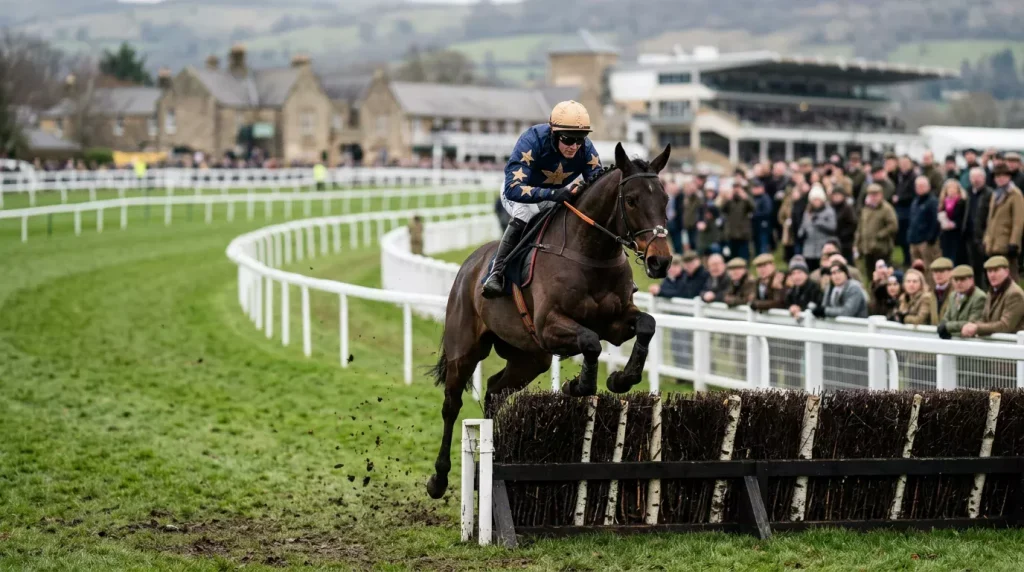
Over jumps, the edge comes from jumping assessment. A horse who has been fluent over the first mile of a chase is building an advantage that doesn’t show in the raw position data. Conversely, a horse making errors at its fences is accumulating risk that the in-play market may not price quickly enough. If you can read jumping technique in real time, you have information the algorithm-driven layers don’t.
The pre-race analysis you’ve done feeds directly into in-play. If you identified a horse who needs a strong pace to be effective and the race is being run steadily, you know before anyone else that the horse’s chance has diminished. That knowledge lets you lay the horse in-play or oppose it on the exchange at a price that still reflects its pre-race status. The market catches up, but not instantly, and those few seconds of clarity are where in-play profit lives.
See also Horse Racing Betting Apps In The UK .
The Pitfalls
In-play horse racing betting amplifies every weakness in a punter’s psychology. The speed of the event triggers impulsive decisions. The swinging prices create a fear of missing out. And the ease of cash-out encourages settling for less than the bet is worth.
The most common mistake is chasing. A pre-race bet loses, and the punter dives into the next race in-play trying to recover. In-play betting on horse racing is too fast and too volatile for recovery strategies. Each in-play bet should be a standalone decision, backed by live observation, not an emotional response to the last result.
Latency is the other killer. If your stream is two seconds behind the exchange’s data feed, you are trading on stale information. Two seconds in a five-furlong sprint is 40 metres. The market has already moved before you see the change. This is why professional in-play traders use satellite feeds, dedicated hardware, and algorithms. A punter with an internet stream and a phone app is at a structural disadvantage, and no amount of race-reading skill closes that gap entirely.
The honest advice is this: treat in-play horse racing as an occasional tool, not a daily habit. The edges are real but narrow, the risks are amplified by speed, and the psychological toll of watching prices move against you in real time is harder to manage than most people admit.
Articles
Written by the editors at Furlongcraft.
