
Betting On Britain's Biggest Races: A Festival-By-Festival Guide For Recreational Punters
 Available in US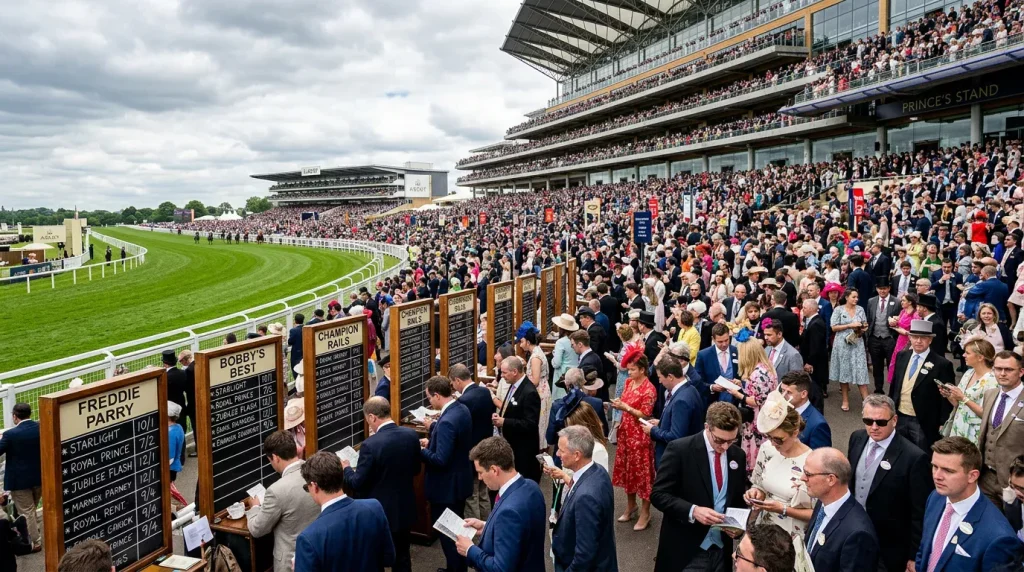
I remember my first Cheltenham Festival. I had done zero preparation, backed four horses based entirely on their names, and somehow finished the week in profit. That was luck, not skill, and the following year — when I arrived armed with a spreadsheet and strong opinions — the market taught me a swift, expensive lesson about the difference between the two. Festival betting is not everyday racing with bigger crowds. It operates on different dynamics, different bookmaker incentives, and a fundamentally different risk profile. If you treat it the same as a Wednesday afternoon at Kempton, you will overspend, overbet, and underwhelm yourself.
This guide breaks down Britain’s biggest race meetings one by one — Cheltenham, the Grand National, Royal Ascot, and the secondary fixtures that still generate serious betting interest — and builds a practical framework for anyone who wants to enjoy the spectacle without torching their bankroll. British racecourse attendance topped 5.031 million in 2025, the first time the figure exceeded five million since before the pandemic, and a significant chunk of that traffic concentrates around half a dozen marquee meetings. These events are where new bettors enter the sport, where the bookmakers fight hardest for your business, and where the emotional pull of the occasion can overwhelm even a sensible staking plan.
Why Festival Meetings Change The Betting Equation
There is a number that explains everything about how festivals reshape the UK betting market. Under-18 attendance at British racecourses rose 17% in 2025, reaching 211,447. That growth is almost entirely driven by festivals — families at Ascot, students at Cheltenham, groups of friends at Aintree who have never placed a bet in their lives but get swept up in the atmosphere. These are future customers, and the betting industry knows it.
Festivals create a temporary microeconomy where normal rules bend. Bookmakers offer enhanced place terms, extra-place specials, and non-runner-no-bet promotions that would be commercially insane on a regular Tuesday card. They do this because the lifetime value of acquiring a new customer at Cheltenham is worth the short-term cost of a generous each-way offer. The promotional landscape is genuinely better for punters during festivals, and that creates real opportunities — if you understand why the generosity exists and where the edges are.
The BHA’s own analysis makes the dynamic explicit. Betting activity has increasingly concentrated around high-profile fixtures, driven partly by the impact of affordability checks leaving fewer large-staking regular customers and partly by natural consumer preference. The bigger meetings attract more recreational punters betting in smaller stakes, and bookmakers have adjusted their marketing and promotional strategies to meet that demand. The result is a festival season that offers recreational bettors better terms, more choice, and more value than any other period of the racing calendar — but also more noise, more temptation, and more opportunities to make emotional decisions.
Understanding that dynamic is the foundation of every strategy suggestion in this guide. Festival betting is not about finding a single winner. It is about navigating a four-day, seven-race-a-day assault course where the winners look obvious in hindsight but were indistinguishable from the losers in foresight, and where the real edge comes from discipline, selectivity, and taking the promotions that the bookmakers are practically begging you to use.
Cheltenham Festival
Four days in March. Twenty-eight races. The biggest concentrated betting event in the British jump racing calendar. William Hill projected an industry-wide turnover of £450 million for Cheltenham 2026, across four days — that is more money moving through the market in one week than most sports generate in a month. The Gold Cup Day alone peaked at 1.8 million television viewers in 2025, the highest figure in four years, and TV viewership is a reliable proxy for betting activity because most at-home viewers are watching with a stake riding on the outcome.
Cheltenham is a jump racing festival, which means the core disciplines are hurdles and steeplechases over National Hunt fences. If those terms are unfamiliar, start with the basics: hurdle races are run over smaller, flexible obstacles; steeplechases involve larger, fixed fences including open ditches and water jumps. The risk of fallers is higher in chases, which makes each-way betting on outsiders more viable because the attrition rate can eliminate fancied runners before the home turn.
The four championship races — Champion Hurdle (Tuesday), Queen Mother Champion Chase (Wednesday), Stayers’ Hurdle (Thursday), and Gold Cup (Friday) — are the headline events, but most experienced festival bettors do their best work in the handicaps. The bigger handicap fields — often 16 to 24 runners — create more value in the each-way market because bookmakers pay four places at 1/4 odds, and the competitive nature of these races means 25/1 shots have a realistic chance of finishing in the frame. Compare that to the Champion Hurdle, where the favourite regularly trades at odds-on and the field rarely exceeds ten runners.
My approach to Cheltenham has evolved over six years from “back a horse in every race” to “have firm views on four or five races and leave the rest alone.” The most expensive lesson festival racing teaches is that activity is not the same as strategy. Betting every race across four days means placing 28 bets minimum, which is a volume that virtually guarantees a losing week unless your strike rate is well above average. The punters I know who consistently do well at Cheltenham are the ones who watch most races from the sofa without a financial interest and save their stakes for the handful of races where they genuinely believe the price is wrong.
Grand National
Twelve million people place a bet on the Grand National each year. That number is so large it almost loses its meaning, so let me put it another way: one in four British adults will have a financial interest in the outcome of a single horse race on a single Saturday in April. Around 30% of those bettors are first-timers or people who have not placed a bet since the previous year’s National. No other sporting event in the UK generates that level of casual betting participation.
The scale of the National betting market creates specific dynamics that you will not find at any other meeting. The total turnover on the race itself approaches £350 million annually — roughly six times the turnover on the Cheltenham Gold Cup. Around 82% of bets placed on the Grand National are £5 or under. That is not a statistic about the race being “just a fun bet.” It is a statistic about market structure. The Grand National betting pool is built from millions of tiny stakes, which means the market is less sharp, less efficient, and more influenced by name recognition, jockey celebrity, and newspaper tips than by genuine form analysis.
For a recreational punter, that market structure is actually an advantage. Because the pool is dominated by uninformed money, the prices available for horses with genuine claims are often more generous than they would be in a smaller, sharper market. The favourite is frequently over-bet (because casual punters gravitate toward the horse they have heard of) while the second and third fancies in the market can drift to prices that understate their actual chances.
The race itself is unique in British racing. Forty runners over four miles two furlongs and 74 yards, with 30 fences including the notorious Canal Turn, Becher’s Brook, and The Chair. The attrition rate is significant: in a typical year, between 10 and 15 horses fail to complete the course, either falling, being pulled up, or unseating their riders. This makes the Grand National an each-way bettor’s paradise, because the official place terms pay four places at 1/4 of the odds, but the effective probability of a given horse finishing in the first four is considerably higher than the raw field size suggests once you account for expected non-completions.
If you are going to bet on one race a year, the Grand National is the obvious choice. If you are going to bet on one race a year and treat it as anything other than a bit of fun with money you can afford to lose, you are making a mistake. Enjoy the atmosphere, pick a horse or two, bet small, and remember that the professionals who study the race full-time still get it wrong more often than they get it right.
Royal Ascot
I attended Royal Ascot for the first time in 2022 and spent the first hour convinced I was at the wrong sporting event. Top hats and morning suits in the Royal Enclosure, champagne flutes outnumbering binoculars, and a general air of social occasion first, horse racing second. Then the first race went off, a 25/1 shot bolted up, and suddenly every top hat in the place was punching the air. Ascot is a flat racing meeting disguised as a garden party, and the betting market underneath the pageantry is as sharp and competitive as anything in British racing.
Five days in June. Thirty-five races. Five million television viewers across the week in 2025, with the final day showing a 20% increase in viewing figures compared to 2024. Royal Ascot is the biggest fixture in the British flat racing calendar, and it draws the best horses from across Europe, the Middle East, Australia, and Japan. The international element is what separates Ascot from every other UK meeting: the form book is genuinely global, which makes it harder to assess but also creates pricing inefficiencies because British bookmakers are less familiar with some international runners.
The betting landscape at Ascot is shaped by two factors. First, the field sizes in the big handicaps — the Royal Hunt Cup, the Wokingham Stakes, the Buckingham Palace Stakes — are enormous, often 20 to 30 runners on a straight course where the draw (which stall your horse starts from) can be as important as form. Draw bias at Ascot is real, well-documented, and varies by ground conditions. On soft going, high draws on the straight course tend to have an advantage; on faster ground, the bias is less pronounced but still present. Ignoring the draw at Ascot is like ignoring the weather at a cricket match — it is the single most important variable that casual bettors overlook.
Second, the Group 1 races attract very small fields of extremely high-quality horses, and the markets are tight. The Gold Cup, the Queen Anne Stakes, the Diamond Jubilee — these races are often dominated by a single horse trading at prohibitive odds, with the each-way value sitting in the second or third favourite rather than the outsiders. The approach that works at Cheltenham — backing each-way outsiders in big handicap fields — also works at Ascot, but only in the handicaps. In the Group races, you are better off either backing the favourite to win or leaving the race alone entirely.
The social atmosphere at Ascot is worth mentioning because it affects betting behaviour in a measurable way. People bet more freely when they are in a social setting, surrounded by friends, drinking champagne, and caught up in the occasion. That is not a moral judgment; it is a description of how festivals work. The bookmakers know it, the racecourse knows it, and the promotional offers are designed to capitalise on it. Set your budget before you arrive, and ideally before you start drinking.
Beyond The Big Three
Cheltenham, the Grand National, and Royal Ascot get the headlines, but British racing has a second tier of festivals that offer excellent betting opportunities with less noise, smaller crowds, and — in many cases — softer markets because the sharp money is concentrated elsewhere.
The Ebor meeting at York in August is arguably the best flat racing festival outside Ascot for pure betting value. The Ebor Handicap itself regularly attracts fields of 20-plus runners, and the overall quality of racing across four days is exceptional. York’s straight course has its own draw biases, the ground tends to be faster than Ascot, and the market is populated by enough casual money to create genuine pricing mistakes.
The Glorious Goodwood meeting, five days in late July, offers a unique challenge because of the undulating track layout. Goodwood is not a fair track — horses drawn wide on the bends are at a measurable disadvantage — and that quirk creates opportunities for punters who study the draw statistics. The market rarely prices in the draw correctly at Goodwood because casual bettors focus on form and ignore track geometry.
In jump racing, the three-day meetings at Aintree (the Thursday and Friday around the Grand National), Sandown’s bet365 Gold Cup card in late April, and the Punchestown Festival in Ireland — which attracts most of the top British-trained runners — all offer competitive fields, generous promotional terms, and the kind of large-field handicaps that reward disciplined each-way betting. The Punchestown Festival has the added advantage of being the end of the jump season, which means the form book is at its most complete and the market at its most predictable.
A Festival Staking Framework That Survives Contact With Reality
Every punter I respect has a version of the same festival discipline, and it boils down to three numbers: a total budget, a standard stake, and a maximum number of bets. The numbers vary from person to person, but the structure does not.
Start with a total budget for the entire festival. Not per day — for the whole event. This is the amount you can afford to lose entirely, and you need to mean that. If losing £200 over four days would cause you genuine stress, your budget is too high. Divide that budget by the number of bets you plan to place. If your budget is £200 and you want to bet on 10 races across the festival, your standard stake is £20. If you want to bet 20 races, it is £10. The maths is simple because the discipline needs to be simple.
I use a fixed-stake approach at festivals rather than varying my stakes by confidence level. The reason is emotional: festival racing is intoxicating, and “confidence” at a meeting like Cheltenham is often just enthusiasm in disguise. The horse I feel most strongly about on Tuesday morning might look completely different by Thursday, and if I have already blown half my budget on oversized stakes in the early races, I have nothing left for the opportunities that emerge later in the week. Fixed stakes remove the decision, which removes the temptation.
The number of bets matters as much as the stake size. At Cheltenham, there are 28 races. If you bet on all of them, you need a 15% strike rate just to break even at average odds — and that is before the bookmaker’s margin. My target is five to eight bets across four days, which means I am watching 20 races without a financial interest. That sounds boring until you realise that the races you watch without a stake are the ones you actually see, rather than staring at your phone refreshing the result.
Ante-Post Versus Day-Of-Race Betting
The festival season is when ante-post betting — placing a bet on a race days, weeks, or months before it takes place — comes into its own. The prices available in the ante-post market for Cheltenham and Ascot are almost always bigger than the prices on the day, because the market has more uncertainty priced in and the bookmakers are competing for early money.
The trade-off is the non-runner risk. If your horse does not run, you lose your stake. There are no refunds in the standard ante-post market unless the bookmaker specifically offers a non-runner-no-bet promotion, which they do increasingly for the big championship races but rarely for the handicaps. That risk is real and quantifiable: at Cheltenham, roughly 15% to 20% of horses entered at the final declaration stage do not ultimately run, whether through injury, ground concerns, or trainer decisions.
My rule of thumb is to bet ante-post only on horses whose participation is virtually certain — the leading contenders for championship races who would need a catastrophic injury to miss the meeting. For the Gold Cup, the sweet spot for ante-post value is usually in late January or early February, after the trials have been run but before the final declarations narrow the field. Leaving it until the week of the race gives you more information but significantly worse prices, and the value window has usually closed by then.
For handicaps, I almost always wait until the day of the race. Handicap weights are assigned relatively late, and the draw (at flat meetings) is not known until a day or two before. Betting ante-post on a handicap is guessing about two critical variables — weight and draw — that materially affect the outcome. The bigger price does not compensate for the additional uncertainty, in my experience.
Making Your First Festival Count
If 2026 is going to be your first festival season, I envy you. There is genuinely nothing else like it in British sport — the noise, the tension, the absurd emotional swings of watching your horse battle up the Cheltenham hill or clear the last at Aintree. Brant Dunshea, the BHA’s Chief Executive, made the point in early 2026 that despite the challenges facing the industry, racecourse attendance is growing, the tax campaign has gained traction, and welfare standards are improving. The sport is in a complicated place commercially, but the product on the track has never been better.
My practical advice for a first festival is deliberately simple. Pick one meeting. Do not try to spread across Cheltenham, Aintree, and Ascot in the same year — each has its own rhythm, its own market dynamics, and its own learning curve. Go to the one that appeals to you most, or watch it on television if attending in person is not practical. Set a budget that you would be comfortable spending on any other four-day entertainment — a short holiday, a concert series, a long weekend away. That is your betting bank for the festival.
Before the meeting, read the racecard for each day. You do not need to study form like a professional — just familiarise yourself with the names, the race types, and the rough market positions. Pick two or three races per day where you have a view, however casual, and leave the rest alone. Bet each-way on anything over 5/1. Bet to win only if you genuinely believe the horse is the most likely winner, not because you want a bigger payout.
And when the week is over, regardless of whether you are up or down, write down what you backed, what it cost, and what you would do differently. That note is worth more than any tip you will read on the internet, because it is built from your own experience rather than someone else’s guesswork.
Articles


Published by the Furlongcraft team.
