
Tote Betting Explained: How The UK Pool Works And When It Beats Fixed Odds
 Available in US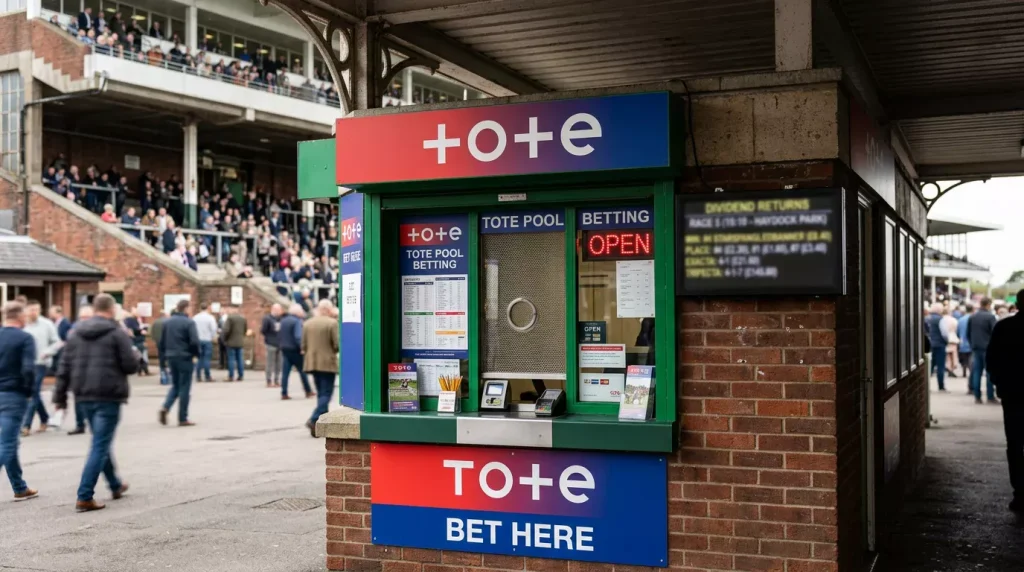
The Dividend That Changed My Mind
I dismissed Tote betting for years. Fixed odds felt cleaner – you knew your price before the race, no ambiguity. Then a colleague showed me a Tote dividend from a midweek meeting at Carlisle where the winner paid 14/1 on the Tote against 8/1 SP. Same horse, same race, nearly double the return. That gap was not a fluke; it was the pool working exactly as designed. Since then, I pay attention to the Tote in situations where the fixed-odds market is thin and the pool might be telling a different story.
Pool betting via the Tote handles roughly £78.2 million in annual turnover in the UK. That is a fraction of the fixed-odds market, but the size matters less than the mechanism. Understanding how pool dividends form – and when they diverge from SP – opens a betting angle that most casual punters ignore entirely.
Tote Betting Explained — More on this topic at horse racing betting how to .
What A Pool Bet Is
Pool betting works on a different principle from fixed odds. When you bet with a bookmaker at fixed odds, your return is determined the moment you place the bet. The bookmaker takes the other side and pays from their own margin. In a pool bet, every stake goes into a common pot. After the race, the total pool is divided among all winning tickets, minus a deduction for the operator.
The Tote is the UK’s pool betting operator. You place a Win bet, a Place bet, or one of the Tote’s combination products, and your money joins the pool. The final dividend – what each winning ticket pays – is calculated after the race, once the pool is closed and the result is official. You do not know your price until after the horse has crossed the line.
This uncertainty is the reason most punters avoid the Tote. Fixed odds feel safer. You can see the number, calculate the return, and make a decision with clear information. Pool betting asks you to commit money without knowing the price. That feels uncomfortable, and in many cases, fixed odds are the better choice. But “many cases” is not “all cases,” and the difference is where the edge lives.
How Dividends Form
The dividend calculation is straightforward in principle. Take the total money in the pool. Subtract the Tote’s deduction – currently around 13.5% for Win bets and slightly higher for Place. Divide the remainder by the number of winning units. The result is the dividend per £1 stake.
Where it gets interesting is in how money flows into the pool. Unlike fixed-odds markets, where the bookmaker adjusts prices continuously based on liability, the pool does not adjust at all until the race is over. If one horse attracts 60% of the pool money, it will pay a short dividend. If a horse attracts 3% of the pool money and wins, it will pay a very large dividend – potentially far more than the SP.
The pool reflects the collective opinion of everyone who bet into it, which includes a different demographic from the fixed-odds market. On-course Tote windows attract racegoers who are betting for fun, often following hunches or picking names. Online fixed-odds markets attract sharper money, form students, and professional punters. This demographic split means the pool’s implied probabilities diverge from the fixed-odds market in predictable ways: favourites tend to be over-backed in the pool (depressing their dividend), while outsiders tend to be under-backed (inflating theirs).
Betting turnover on British horse racing has fallen 4.3% in 2025 compared with 2024, a trend that affects pool liquidity at smaller meetings where the total money in the pot is already thin. When the pool is small, dividends become more volatile – which is where the largest Tote payouts tend to appear.
Win And Place On The Tote
The two simplest Tote products are Win and Place. A Tote Win bet requires your horse to finish first. A Tote Place bet requires it to finish in the places – the number of places depends on field size, just as with fixed-odds each-way betting.
For Win bets, the comparison with SP is direct. After the race, you can check whether the Tote Win dividend was higher or lower than the SP. Over a large sample, favourites tend to pay less on the Tote than SP, and outsiders tend to pay more. This pattern holds because the casual money in the pool gravitates to short-priced horses, diluting their dividends while leaving the long-shot dividends relatively rich.
Place dividends on the Tote follow the same logic but with an extra wrinkle: the place pool is separate from the win pool, and it tends to be smaller. Smaller pools mean more volatility. A Place dividend on a 5/1 shot might return £2.40 one day and £3.80 the next, depending entirely on how the pool money distributed across the placed horses. Fixed-odds place terms are predictable by comparison, which is why most each-way punters stick to bookmakers rather than the Tote for the place component.
The Tote Guarantee
Aware that pool dividends can sometimes be poor – particularly on heavily backed favourites – the UK Tote introduced the Tote Guarantee. This promises that the Tote Win dividend will never be less than the SP. If the pool dividend would have returned less than SP, the Tote tops it up to match.
The Guarantee removes the main downside of pool betting: the risk of receiving a worse price than you could have got with a bookmaker. With the Guarantee in place, a Tote Win bet gives you the pool dividend or SP, whichever is higher. This is structurally similar to Best Odds Guaranteed on the fixed-odds side and makes the Tote a one-way bet against SP – you can only match it or beat it, never lose to it.
The Guarantee does not apply to all Tote products – it covers Win bets specifically – and it does not eliminate the Tote’s deduction from the pool. What it does is cap your downside, which makes Tote Win betting a genuinely rational option in situations where you suspect the pool dividend might exceed SP. The worst case is that you match the bookmaker; the best case is a dividend that significantly exceeds it.
See also Placepot Strategy .
When The Tote Pays Better
The situations where the Tote outperforms fixed odds follow a recognisable pattern, and I look for three conditions.
First, small fields at low-profile meetings. When a 7-runner race at Sedgefield draws a thin pool, the dividend calculation is driven by a small number of bets. If the winner attracted little pool support, the payout can be dramatically higher than SP. I have seen Tote dividends exceed SP by 50% or more at quiet midweek meetings – these are not everyday occurrences, but they happen often enough to warrant checking the Tote’s broader products as part of your routine.
Second, outsiders in big-field handicaps. When 20 runners line up for a competitive handicap, the pool money spreads across the field. If a genuinely unconsidered horse wins – one that attracted 1% or 2% of the pool – the dividend can be enormous. In fixed-odds terms, the bookmaker would have priced that horse at 25/1 or 33/1 and taken a limited liability. In the pool, the same result delivers a dividend based on share of the pot, which has no cap.
Third, any race where a single heavily backed runner skews the pool. If the favourite absorbs 55% of the pool money and loses, the remaining 45% is distributed among fewer winners. This compression effect inflates dividends for any non-favourite that finishes in the frame. Watching the pool distribution before the off – available on the Tote’s website – gives you a live read on where the money is sitting and whether the dividend is likely to exceed SP.
Articles
Written by the editors at Furlongcraft.
