
Studying Form In UK Racing: Building A Repeatable Selection Process
 Available in US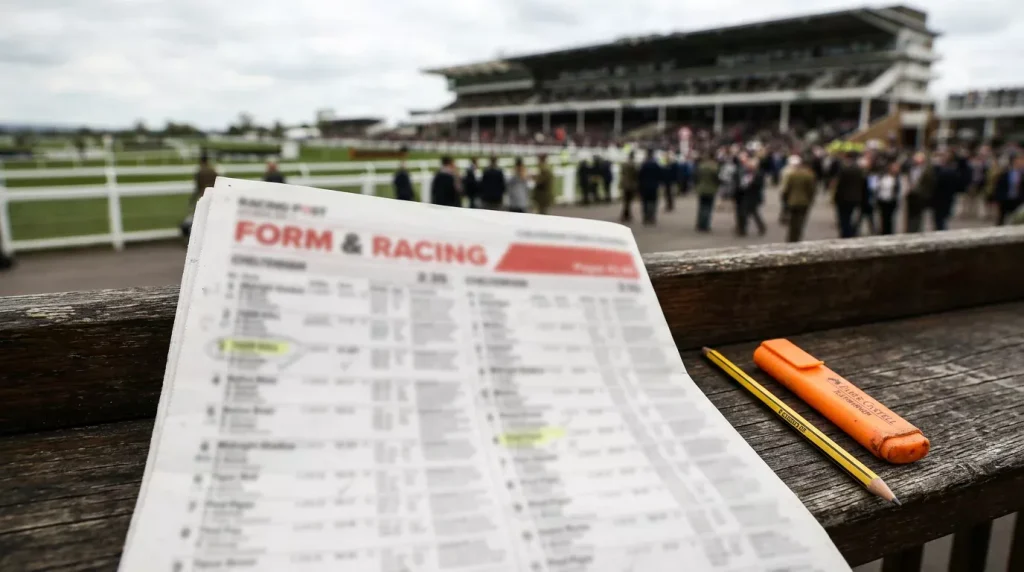
What Form Really Means In UK Racing
I backed a horse once purely because his name made me laugh. He finished ninth of ten. The winner that day had a form line that screamed “back me” – recent course win, dropped in class, trainer in form, jockey booking upgraded. I just hadn’t looked. That was the afternoon I started treating form as something worth studying rather than glancing at.
Form, in its simplest sense, is a horse’s racing history compressed into a string of numbers and letters. A line like 2131-4 tells you the horse finished second, first, third, first, then fourth after a break. But raw finishing positions are only the surface. Real form analysis means understanding why those results happened – the ground, the class, the pace, the trip, the margin. Two horses can both show “1” in their last run and have wildly different prospects next time out.
With average field sizes sitting at 8.9 on the Flat and 7.84 over jumps in 2025, down from 9.14 and 8.49 respectively, every runner now carries more weight in the market. Smaller fields mean fewer hiding places for poor form readers – and fewer excuses for backing the wrong horse.
Studying Form In UK Racing — More on this topic at horse racing betting how to .
The Primary Factors That Shape A Selection
Ask ten experienced punters what they check first and you’ll get ten different answers, but the ingredients are almost always the same – just arranged in a different order. Here’s the hierarchy I’ve settled on after six years, and the reasoning behind it.
Recent form comes first. A horse’s last three runs matter more than the last ten. The BHA projects that runs on British racecourses will decline 6-7% between 2024 and 2027, which means horses are being campaigned more selectively. A trainer who targets a specific race is a stronger signal than ever, and you can often read that intent in the spacing of entries.
Official ratings and speed figures come next. The official rating (OR) tells you where the handicapper places the horse relative to the population. Speed figures – whether from Racing Post’s RPR, Topspeed, or subscription services – attempt to measure how fast a performance actually was, adjusting for going and track. Neither is perfect, but together they give a two-dimensional picture: one measures relative ability within a cohort, the other measures absolute performance against the clock.
Trainer and jockey form sit just below. I don’t mean career statistics – I mean current form. A trainer running at 22% in the last fortnight is sharper than one running at 14% for the season. Jockey bookings are even more revealing when they change: a yard replacing its usual conditional with a top rider is spending a percentage of the prize money before the race is even run.
Going preference, trip suitability, and draw all feed into the final assessment, but each deserves its own discussion. The critical point is that form study is a process of layering factors, not picking one in isolation.
Reading Class Changes
I once watched a mare win a Class 5 at Catterick by six lengths and immediately thought “she’s well ahead of this grade.” She was raised 10lb by the handicapper, entered in a Class 4 at York, and finished midfield. That’s the class trap. A horse can be impressive within its grade and still be exposed a rung higher.
Class in UK racing runs from Class 1 (Group and Listed races) down to Class 7. A horse dropping in class isn’t automatically a good bet – you need to understand why it’s dropping. If the drop follows a layoff or a wind operation, the trainer may be rebuilding confidence. If it follows a string of poor runs at the higher level, the horse might simply be in decline.
The sharpest class angles come from horses who ran creditable races at a higher grade – beaten three or four lengths in a Class 3 handicap, now back in Class 4 off the same mark or lower. That profile tells you the horse has ability above its current level and hasn’t been punished for showing it. Cross-referencing the UK class system with recent finishing positions is one of the most reliable filters I use.
Course And Distance Form
There’s a statistic that gets thrown around racing circles: “C&D winners” – horses who have won at the same course and distance. It’s stamped on racecards, highlighted on websites, and treated as a near-guarantee by some punters. The reality is more nuanced than the shorthand suggests.
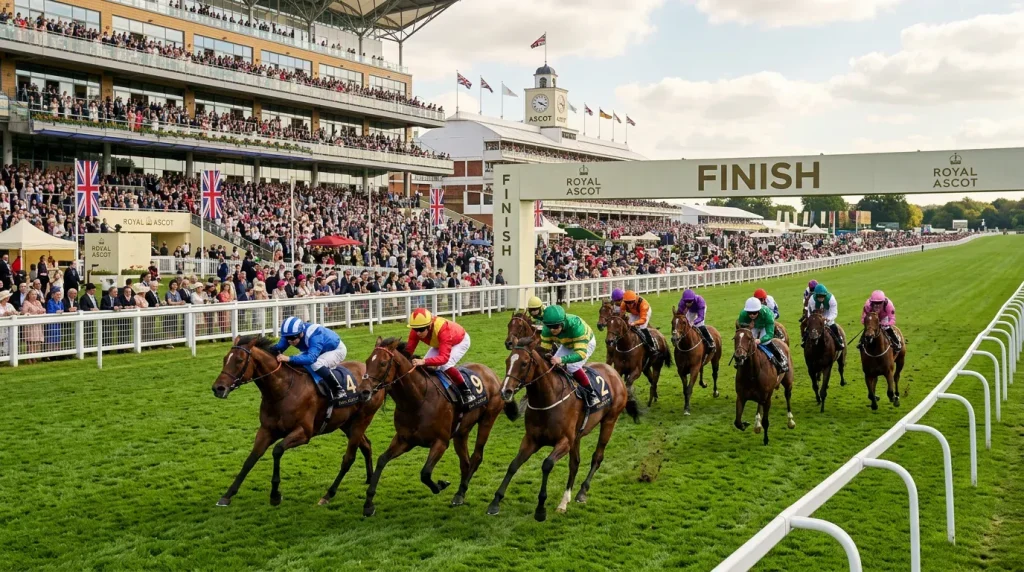
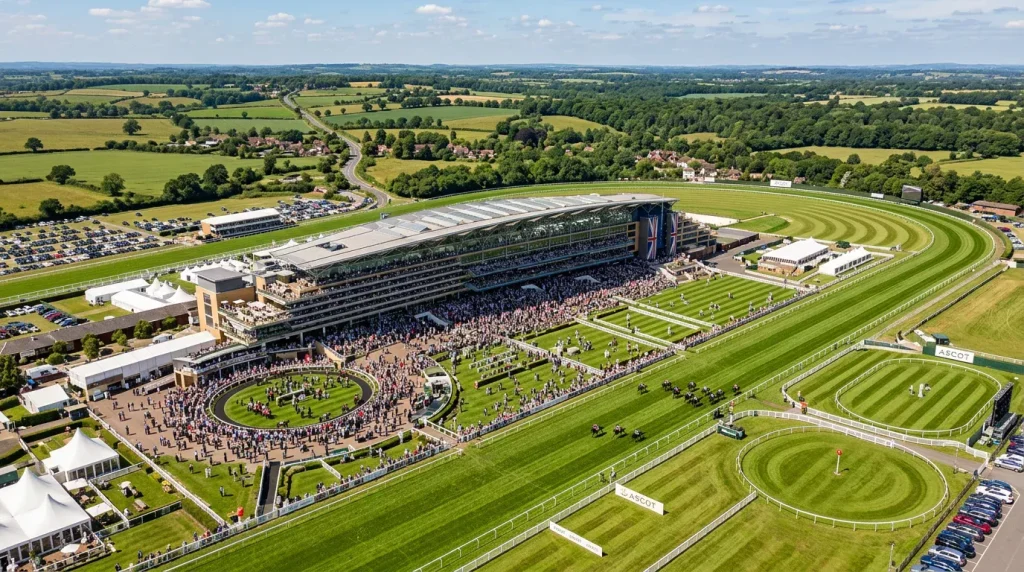
Course form matters because British tracks vary enormously. Epsom’s camber and downhill run into the straight bear no resemblance to Chester’s tight left-handed circuit, and both are nothing like Ascot’s galloping right-handed track. A horse who handles undulations won’t necessarily act on a flat, sharp course. Distance form is less track-specific but equally important: a horse who stays a mile and a half on soft ground may not stay it on quick ground, because faster surfaces test speed over stamina.
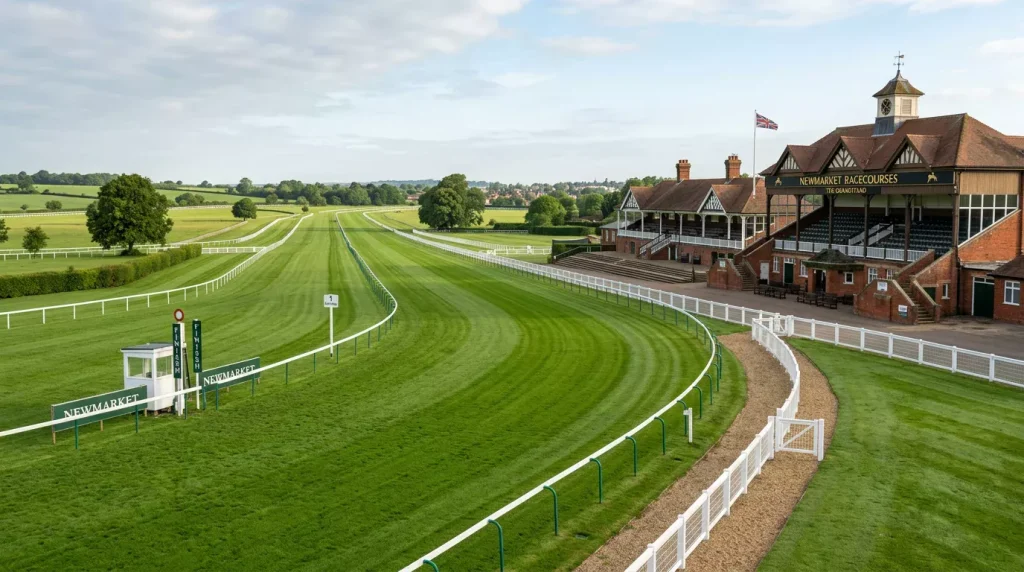
Where course-and-distance form is genuinely powerful is at the specialist tracks – Beverley, Brighton, Chester, Epsom. These courses are quirky enough that previous positive experience is a real advantage. At a galloping, conventional track like Newbury, course form carries less weight because the track doesn’t ask unusual questions of the horse.
The practical lesson: treat C&D as a plus, not a qualification. A horse with six runs and no win at Cheltenham isn’t necessarily unsuited to the track – it may just have been running in the wrong grade. Context matters more than the stamp.
See also The UK Horse Racing Class System .
Pace Mapping And Why It Matters
This is the part of form study that separates casual punters from serious ones. Most people look at what horses have done; pace mapping asks how the race will unfold, which determines what opportunities each horse will have.
The basic question is: who leads? If a race has three confirmed front-runners entered, the early pace will be strong, and horses held up behind the pace should benefit. If there’s only one natural leader, that horse could control the tempo and steal the race from the front. These dynamics aren’t theoretical – they change the outcome of races daily.
I build a simple pace map by reviewing the last three runs of every horse in a race and noting whether each led, raced prominently, was held up, or came from behind. You don’t need software for this – a notebook works. The pattern tells you whether the race will be truly run (favouring closers) or steadily run (favouring front-runners and prominent racers). When you overlay this with the track’s characteristics – does the course favour pace, or is there a long run-in that rewards hold-up horses? – you have an edge that most recreational bettors never access.
Pace is the connective tissue between form figures and race outcome. Two horses with identical form lines will produce entirely different results depending on the race shape, and learning to anticipate that shape is the step that turns form reading from retrospective analysis into forward-looking handicapping.
Articles

Created by the "Furlongcraft" editorial team.
