
Following Tipsters In UK Racing: How To Judge A Source Before You Stake
 Available in US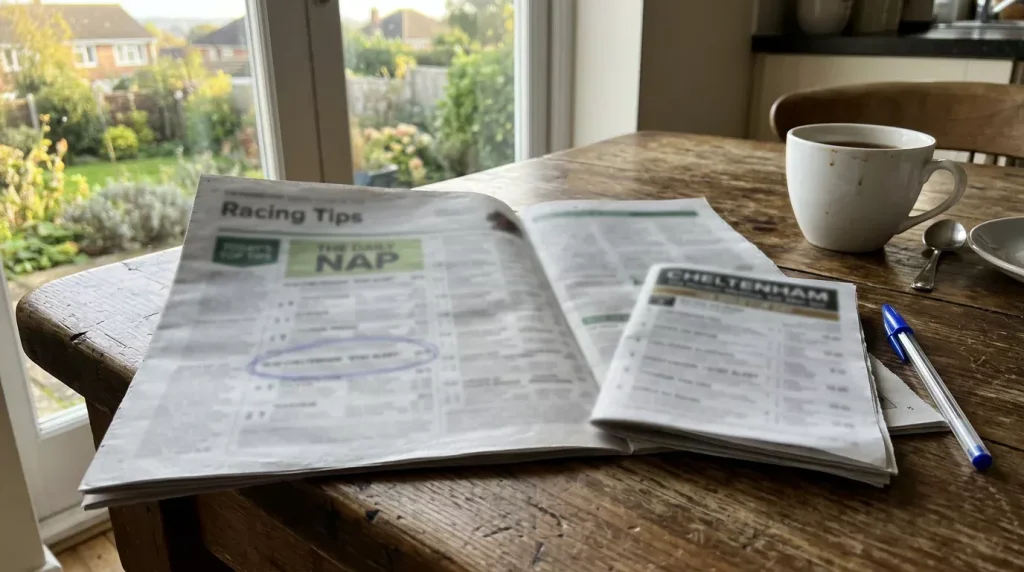
A colleague once followed a paid tipster for six months without questioning a single selection. He staked every NAP, every next-best, every “banker of the day.” By month four he was down 40% of his bank and still convinced the service would come good. It did not. When he finally sat down and audited the results, the tipster’s published strike rate did not match the actual P&L once you accounted for the prices that had already shortened by the time he placed his bets. That gap – between the price the tipster claims and the price you actually get – is the central problem of following tips, and ignoring it costs punters more than bad selections ever will.
Following Tipsters In UK Racing — More on this topic at horse racing betting how to .
What A NAP Is And Why It Matters
In racing parlance, a NAP is a tipster’s strongest selection of the day – the one they are most confident about. The term comes from the card game Napoleon, where “nap” signifies the highest bid. Most newspaper and media tipsters publish a daily NAP alongside a next-best (NB) and sometimes a broader selection of fancies. The Racing Post runs a Naps Table that ranks tipsters by the profit or loss their NAP selections would have returned to a £1 level-stakes backer over the flat and jumps seasons.
The NAP is the simplest metric for judging a tipster because it strips away everything except the core question: can this person identify a winner at a price that returns a profit over time? A tipster who publishes five selections a day might land three but lose on the other two at shorter prices, leaving you worse off overall. The NAP isolates the single selection they are prepared to stand behind, and the Naps Table makes the results transparent. If a tipster’s NAP profit is negative over a full season of 200-plus racing days, their best pick is costing you money.
Free Versus Paid Tipsters
Free tips are everywhere – newspaper columns, social media accounts, racing websites, podcasts, Telegram channels. The quality ranges from excellent to appalling, and the absence of a price tag tells you nothing about the quality. Some of the best long-term records in UK racing belong to newspaper tipsters who have been publishing free NAPs for decades. They operate under public scrutiny, their results are tracked independently, and they have reputational skin in the game even if they do not charge a subscription.
Paid services occupy a different space. The pitch is usually the same: “professional-grade analysis,” “inside information,” and a track record presented as a series of winning screenshots. The first thing to check is whether the track record is independently verified. Any tipster can post screenshots of winners. What you need is a timestamped, complete record of every selection – winners and losers – verified by a third party. Services that refuse to submit to independent auditing are telling you something. Listen.
Richard Wayman, the BHA’s Director of Racing, has noted that betting activity has remained under pressure, with total turnover in the first nine months of 2025 running 4.2% below the same period in 2024 and 12.8% below 2023. In a contracting market, the incentive for tipsters to oversell their records grows. When fewer people are betting and money is tighter, the subscription model needs to work harder to attract customers, and that means bolder claims and more aggressive marketing. The punter paying £30 a month for tips is not just buying selections – they are funding the tipster’s revenue model, and that model does not require the tipster to be profitable.
Evaluating A Tipster’s Record Properly
The headline strike rate is the number most tipsters lead with, and it is the least useful metric on its own. A strike rate of 35% at an average price of evens produces a loss. A strike rate of 18% at an average price of 7/1 produces a healthy profit. What matters is the combination of strike rate and average odds, expressed as either return on investment (ROI) or profit to advised prices.
Advised prices are the odds the tipster recommends at the time they publish the selection. If the NAP is advised at 6/1 but you place the bet an hour later at 4/1, your economics are fundamentally different from the tipster’s published return. A tipster showing 15% ROI at advised prices might produce a 2% loss at the prices available to followers who are not sitting at their screen the moment the tip is published. This is not dishonesty – it is the mechanics of a market that reacts to public information. But it is the single most important factor in deciding whether following a tipster can actually work for you.
Sample size also matters enormously. Any tipster can produce a 20% ROI over 50 bets through variance alone. Over 500 bets, variance smooths out and the underlying edge – or lack of it – becomes visible. I will not form an opinion on a tipster’s ability until I have seen at least a full jumps or flat season of results, ideally both. Anything shorter is anecdote, not evidence.
See also Keeping A Betting Record .
Price Decay And The Cost Of Following
When a tipster with a large following publishes a selection, money flows into the market within minutes. The horse shortens. By the time a casual follower checks their phone and places the bet, the price may have contracted by two or three points. This is price decay, and it is an unavoidable cost of following public tips. The more popular the tipster, the faster and deeper the contraction.
Some services try to mitigate this by publishing tips early in the morning, before the market is liquid enough to absorb the volume. Others stagger their releases or offer “early bird” alerts to subscribers. These strategies help at the margins but do not eliminate the problem. Customer funds across UK betting operators totalled £1.0 billion at the last count, down 6.9% year-on-year – a reminder that even in a shrinking market, the money that follows tips moves prices efficiently.
The practical implication is that following a tipster only makes financial sense if you can consistently obtain the advised price or close to it. If you routinely take prices two or more points shorter, you are paying for a service whose published returns you cannot replicate. At that point, the subscription fee is not an investment – it is an expense with negative expected value.
Using Tips Without Being Led
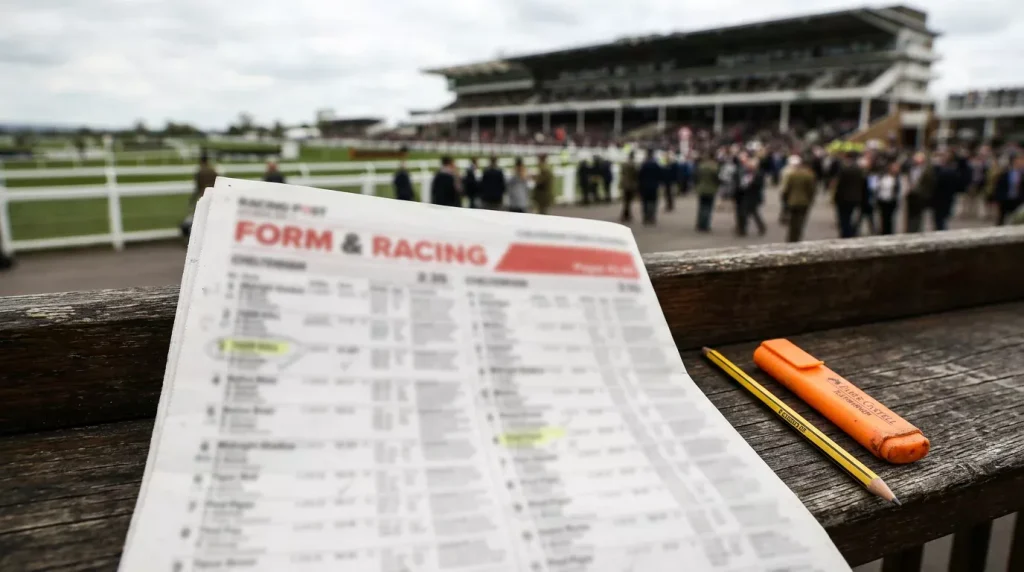
The most productive way to use tipsters is as a starting point, not an instruction manual. I follow three newspaper tipsters whose reasoning I respect, but I do not blindly stake their selections. Instead, I use their picks as a shortlist – races and runners worth investigating. If a tipster I trust highlights a horse at Newbury, I look at it. If my own analysis agrees and the price still offers value by the time I check, I bet. If the price has already gone, I move on.
This approach treats tips as information rather than signals. It respects the work the tipster has done while acknowledging that the price you take is your responsibility, not theirs. It also means you develop your own judgement over time, rather than outsourcing it indefinitely. The goal is not to become independent of tips overnight – it is to use them as a scaffold that supports your own learning until the scaffold is no longer necessary. Most profitable punters I know started by following tipsters and ended by becoming their own.
Articles
Published by the Furlongcraft team.
