
Handicap Racing Explained: The Logic Of Carrying More To Win Less
 Available in US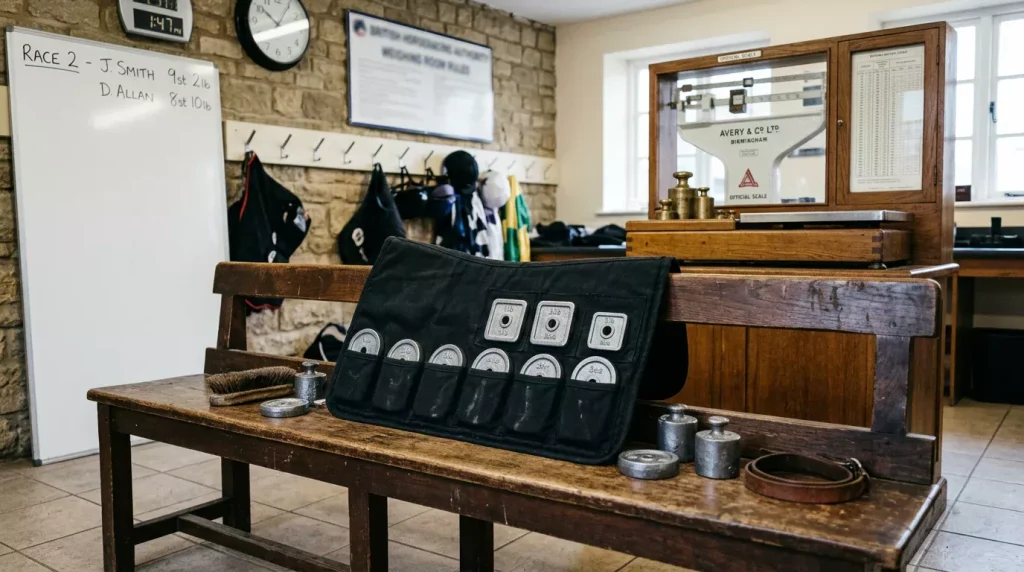
The Race Where Everyone Starts Equal (In Theory)
A friend who’d never been racing once asked me why one horse was carrying 10 stone and another 9 stone 2. “Isn’t that unfair?” he said. I told him that was the entire point – handicap racing is built on the idea that unfairness is the problem, not the design. The better horse carries more weight to bring it back to the field. In theory, every runner crosses the line together. In practice, the system creates the most complex and rewarding puzzle in the sport.
Handicaps account for a huge proportion of racing in Britain. They fill the cards at every course, from Class 2 contests at York to Class 6 races at Wolverhampton, and they generate the majority of betting turnover. BHA chief executive Brant Dunshea noted that the industry has continued making important progress to safeguard racing’s long-term health despite ongoing challenges – and handicap racing is central to that effort, because it keeps competitive fields together and keeps punters engaged.
Handicap Racing Explained — More on this topic at horse racing betting how to .
How The Handicapper Sets The Marks
Every horse that has run at least three times in Britain receives an official rating, or mark, from the BHA handicapping team. The mark is expressed as a number – say 82 – which corresponds to a specific weight in each race. A horse rated 82 carries less weight than one rated 92 in the same race, and the 10lb difference is the handicapper’s assessment of the gap between them.
The initial mark is set after a horse’s first three qualifying runs. Before that, the horse can only compete in maiden or novice races, which are not handicaps. Once the mark is assigned, it moves after every performance. A convincing win might earn a rise of 5-7lb. A poor run might see the horse left on its current mark or dropped a pound or two. The handicapper’s job is reactive – responding to results, not predicting future ones.
This creates a natural cycle. A horse wins, gets raised, becomes harder to win off the new mark, loses, gets lowered, and eventually reaches a level where it can compete again. The cycle is predictable in broad terms, but the timing and magnitude of each adjustment is where the handicapper’s judgment comes in – and where the punter can find an edge.
Weight, Form, And The Fitness Question
The old racing maxim says that weight stops trains. It’s an exaggeration, but the principle holds. A pound of weight is generally reckoned to be worth about a length over a mile on the Flat, though estimates vary by distance and going. Over jumps, weight becomes even more significant because the exertion of jumping while carrying extra mass compounds over three miles and thirty fences.
The interesting question isn’t whether weight matters – it clearly does – but whether the handicapper’s weight allocation accurately reflects the gaps between horses. If Horse A is rated 10lb higher than Horse B, it should beat Horse B by ten lengths, all else equal. But all else is never equal. Going changes, horses come in and out of form, and some runners carry weight better than others. A big-framed gelding rated 95 may handle 11 stone comfortably; a slight filly rated 87 may struggle under 10 stone 5.
Fitness adds another layer. Field sizes on the Flat averaged 8.9 runners in 2025, down from 9.14 the year before, and the BHA expects total runs to drop another 6-7% by 2027. Trainers are being more selective about where they run their horses, which means a horse appearing at a race has often been specifically targeted at that opportunity. A fresh horse returning from a break with a mark that’s been allowed to slip during the absence – that’s one of the strongest angles in handicap betting.
See also Going Explained .
Spotting Well-In Horses
Being “well in at the weights” is racing’s way of saying a horse has a lighter burden than its true ability suggests. It happens for several reasons, and recognising them is the core skill of handicap betting.
The most common route is improvement. A three-year-old who ran a career-best last time may have been raised 5lb, but if the handicapper underestimated the performance, the horse is still well-in. Speed figures are the clearest way to check: if the figure for the last run translates to a rating 6lb higher than the current mark, the horse has that margin in hand.
Another path is the horse returning from a break on a lower mark. The handicapper can’t raise or lower a horse that isn’t running, but fitness and form can change during the absence. A horse who was rated 90 and went wrong, dropped to 82 after a series of below-par runs, then left the track for six months of rest and rehabilitation – if the horse returns in good order, that 82 mark is a gift.
Headgear changes can signal intent. First-time cheekpieces, a visor, or blinkers suggest the trainer is trying something to unlock more ability. It doesn’t always work, but when a well-in horse also gets headgear for the first time, the combination of ability and intent can be powerful.
The trap is the “well-in but declining” horse – one whose mark has been lowered because the horse is genuinely getting worse, not because it’s underrated. Age, wear, and respiratory issues all erode ability. Reading the difference between a horse that’s well-in and a horse that’s well-past is why careful form analysis always comes before the weight argument.
Betting In Handicaps
Handicaps are the bookmaker’s bread and butter because they produce competitive fields, close finishes, and results that are hard to predict with certainty. For the same reasons, they offer the most consistent opportunities for punters who do their homework.
My process for handicap races starts with eliminating horses that don’t fit the race conditions – wrong ground, wrong trip, wrong class. I then rank the remaining runners by how well their current mark reflects their actual ability. Speed figures, recent form trajectory, and class of opposition beaten all feed into that ranking. The horse at the top of my list isn’t always the one I back – price matters. If the market already reflects the horse’s well-in status, there’s no value, regardless of ability.
Large-field handicaps – 16 runners or more – require a different approach. In those races, pace and draw become as important as form, because the race dynamics can override individual ability. A well-in horse drawn widest on a course that favours the rail may struggle to get involved, while a lesser horse with a dream draw and a clear run up the inside can outrun its mark. The best handicap punters think about the race as an event, not just a collection of form lines.
Articles



Prepared by the Furlongcraft editorial staff.
