
Going Explained: How Ground Conditions Reshape A UK Race
 Available in US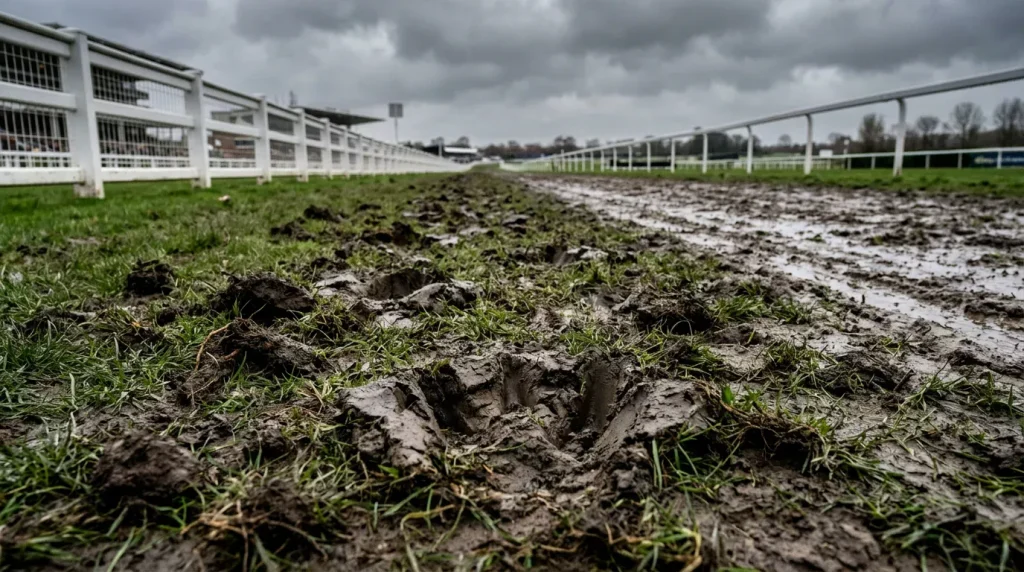
The Ground Under The Hooves
I had a near-perfect day at Cheltenham in November a few years back – three selections, three placed, two winners. Then the overnight rain came. The going shifted from Good to Soft to Heavy between the morning inspection and the first race. I kept my afternoon picks unchanged. None of them placed. The going didn’t just alter the results; it reversed them. Horses I’d dismissed in the morning galloped through the mud as if they’d been waiting all year for it, because they probably had been.
Going – the official description of ground conditions – is one of the most powerful variables in British racing. It changes the speed of the race, the energy expenditure of every stride, the advantage of stamina over speed, and the relevance of most form lines. A horse’s record on Good ground tells you almost nothing about how it’ll handle Heavy, and vice versa. Learning to read the going – and to adjust your betting around it – is as important as studying form itself.
Going Explained — More on this topic at horse racing betting how to .
The Going Scale
British going is reported on a scale that runs from Hard (the fastest, driest surface) to Heavy (the slowest, wettest). The full sequence on turf is: Hard – Firm – Good to Firm – Good – Good to Soft – Soft – Heavy. All-weather surfaces use a separate scale: Fast – Standard to Fast – Standard – Standard to Slow – Slow.
In practice, you’ll rarely see Hard declared in Britain – it almost never gets that dry, and tracks water the ground to prevent it. Firm is common during a dry summer on the Flat. Good to Firm is the standard summer going and broadly suits most horses. Good is the neutral point – neither testing nor quick. Once the description moves beyond Good to Soft, you’re in genuinely testing territory where stamina, action, and breeding start to matter more than raw speed.
The going can be split across the course, too. “Good, Good to Soft in places” is a common call, meaning the ground is generally safe but patchier in sheltered areas or on bends where drainage is weaker. These split descriptions are worth noting because they often indicate deterioration during the card – if it’s Good to Soft in places at 1pm, it may be Soft by the last race if more rain arrives.
The Going Stick And The Clerk Of The Course
How is going actually measured? Before 2007, it was almost entirely subjective – the clerk of the course walked the track, stuck a heel in the ground, and offered a judgment. Now, British racing uses the GoingStick, a device pushed into the turf that measures shear strength and penetration. The reading is a number: 14+ means Hard, around 8-9 is Good, below 5 is Heavy. The clerk still makes the final call, but the GoingStick provides a standardised baseline.
The clerk of the course remains important because the stick only measures where it’s pushed. A reading at the two-furlong marker may differ from the ground on the bend or at the finish line. The clerk walks the course and synthesises the readings with a physical assessment. Experienced clerks – some have been in the role for decades – add context the stick can’t capture: how the ground is draining, how it changed overnight, how it responds under racing.
For punters, the morning going report is a starting point, not a conclusion. Check it again 30 minutes before race time. If it’s changed, reconsider every selection. I’ve scrapped entire cards at 12:30pm because the going shifted two categories between declaration time and the first race.
Soft-Ground Horses Versus Firm-Ground Horses
Why do some horses love mud and others hate it? Partly it’s physical – a horse with a long, sweeping stride covers ground efficiently on fast surfaces but can’t generate the same power when its hooves are sinking in. A shorter-striding, strong horse can punch through soft ground where a long-striding rival labours. Breeding plays a role, too. Certain sire lines – particularly those descended from stamina-oriented National Hunt bloodlines – produce offspring who thrive on testing ground.
The going also filters fields by fitness and resilience. Soft and Heavy ground demands more energy per stride, which turns a mile race into the equivalent of a mile and a quarter in terms of physical effort. Horses who are less fit, carrying excess condition after a break, or at the end of a long campaign tend to struggle in testing conditions. This is why fresh, fit horses from powerful yards so often win in the mud – they have the reserves to handle the extra demand.
Overall betting turnover on British racing fell 4.3% in 2025 versus 2024 and 10.3% against 2023. Part of that decline maps onto winter racing and the challenging ground it brings – when going is testing and fields are smaller, some punters simply stop betting. The ones who stay active in those conditions often find less market efficiency and better prices, because the recreational money has left the pool.
See also Flat Vs Jumps Racing .
How Going Affects Prices
Bookmakers re-price markets after a going change, but they rarely do so quickly enough. This is one of the most actionable edges available to punters who pay attention.
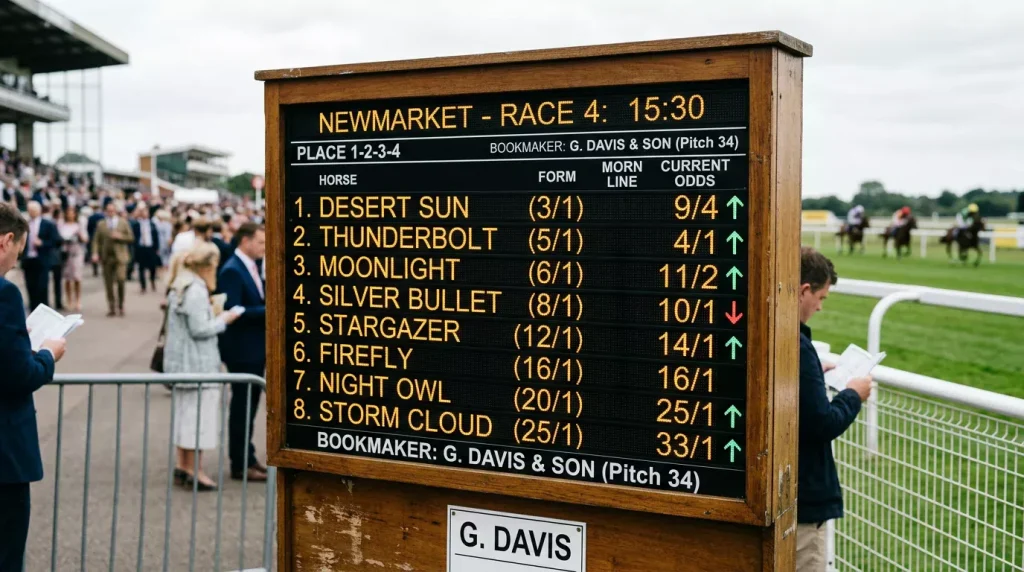
Here’s how it works in practice. Overnight markets are priced based on the going at declaration time. If the ground is Good to Firm on Tuesday evening and it rains heavily overnight, the going might be Good to Soft or Soft by Wednesday morning. Horses with strong soft-ground form will shorten in the morning market, and those with no form on soft will drift. But the adjustment is often gradual, and early movers who check the weather forecast and the morning going update can lock in prices before the full market correction.
The reverse is equally valuable. A dry forecast that firms up the going catches out punters who backed soft-ground horses the night before. If you’re watching the weather and the GoingStick readings, you can anticipate these shifts and either back or oppose horses before the market catches up. In Q1 2025, turnover on core fixtures dropped 14.4% year-on-year while premier fixtures held steady – the smaller, less-liquid meetings are exactly where going changes create the biggest dislocations between price and probability.
Going isn’t a separate topic from form analysis; it’s inseparable from it. A horse’s form is only meaningful in the context of the ground it was achieved on, and the ground it’ll face next time. Get that relationship right, and the prices take care of themselves.
Articles

Written by the editors at Furlongcraft.
