
Are UK Betting Shops Still Relevant? A 2026 Reality Check For Racing Punters
 Available in US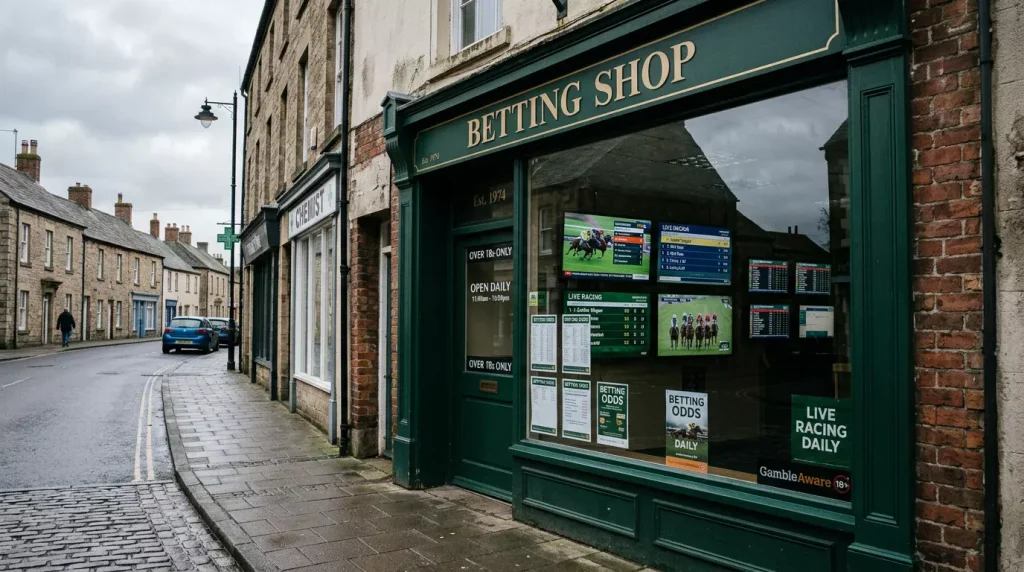
I walked into a Ladbrokes in south London last March to watch a Saturday Newbury card. There were four other people in the shop. One was filling in a football coupon. Two were watching the greyhounds. One was asleep. The counter clerk told me he used to have queues on a Saturday – actual queues, out the door on Grand National day. Those queues live online now, and the shop is a quieter, stranger place than it was even five years ago. But quieter does not mean irrelevant. The high-street betting shop still serves a purpose in 2026, though that purpose has changed, and whether it survives another decade depends on questions the industry has not yet answered.
Are UK Betting Shops Still Relevant? A 2026 Reality Check For Racing… — More on this topic at horse racing betting how to .
The Decline In Numbers
The contraction is not a rumour or a projection – it is already in the data. The number of licensed betting shops in the UK fell to 5,825 in the 2024-25 reporting year, a drop of 22.8% from pre-pandemic levels. That is not a gradual thinning. That is entire streets losing their bookmaker, entire towns going from two shops to none.
Multiple forces drove the decline at once. The 2019 reduction of fixed-odds betting terminal stakes from £100 to £2 removed the single most profitable item in most shops, effectively halving the per-shop revenue overnight. Covid accelerated the online migration that was already underway. Rising rents on the high street made marginal shops uneconomic. And the shift in demographics did the rest – younger bettors who grew up with smartphones never developed the shop habit in the first place. About 13% of the UK population still visits a betting shop at least once a month, with men at 20% and women at 6%, but the trend is clearly downward, and the shops that remain tend to cluster in areas with older, less digitally engaged populations.
What Shops Still Offer
Strip away the nostalgia and ask a practical question: is there anything a betting shop does that an app cannot? The answer, surprisingly, is yes – though the list is shorter than it used to be.
Cash betting is the most obvious advantage. A shop transaction leaves no digital trail. You walk in, place a bet, collect your winnings, and leave. No account, no deposit history, no affordability-check algorithm tracking your net deposits over 30 days. For punters who value privacy or who have been frustrated by online checks, the shop offers frictionless access to the market. Whether that is a feature or a loophole depends on your perspective, but the demand is real.
There is also the social element. For a certain cohort of racing punter – typically older, often retired – the shop is a community space. They come for the racing, but they stay for the conversation, the shared experience of watching a finish together, the daily rhythm of it. An app on your sofa does not replicate that. I am not sentimental about it, but I recognise that it matters to people, and a society that closes every communal space for older men without replacing it with something is storing up problems.
Shops also handle certain bet types more fluidly than apps. Requesting a “special” – a bespoke bet that is not listed on the standard coupon – is easier face-to-face. Some shops will price up cross-sport multiples or non-standard racing combinations that the app does not offer. The margins are usually worse than you would get pricing the legs individually online, but the convenience of a single slip has its appeal.
Shop Versus App Pricing
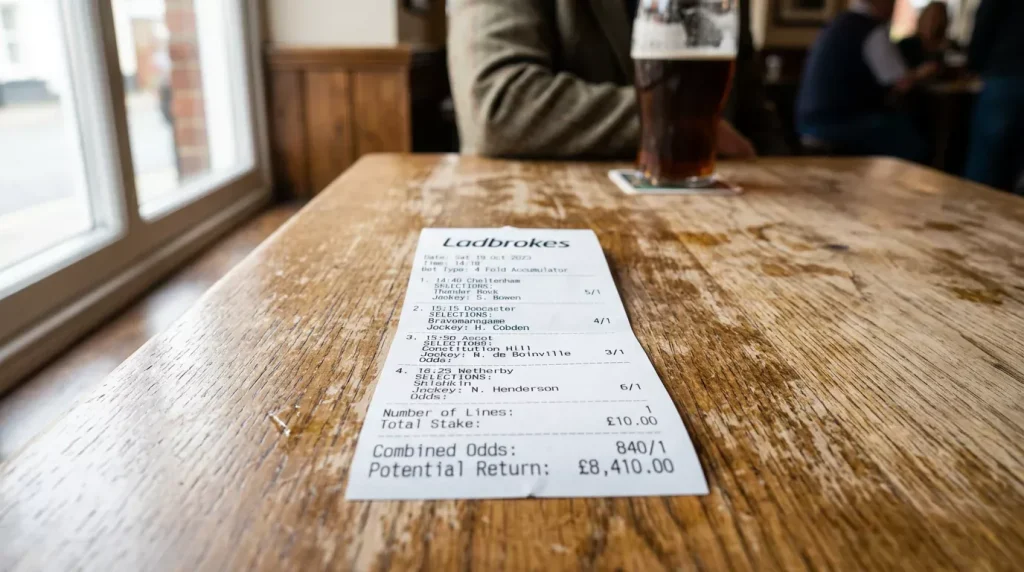
Here is the uncomfortable truth: shops almost always offer worse odds than apps. Online operators can afford tighter margins because their overheads are lower – no rent, no counter staff, no utilities for a physical premises. A horse priced at 5/1 on your app might be available at 9/2 on the shop screen. Over hundreds of bets, that half-point difference compounds into a meaningful cost. Best Odds Guaranteed, the promotion that pays you the bigger of the price you took and the Starting Price, is widely available online but rarely offered in the shop.
That said, the shop does occasionally price differently from the app in your favour. Early-morning prices in the shop sometimes reflect overnight tissue odds that have not yet moved in line with market money. If you are in the shop before the exchanges open and you spot a price that looks generous, it might genuinely be bigger than anything available online at that moment. These opportunities are rare, depend on timing, and vanish quickly – but they exist.
Regulation Inside The Shop
Shop regulation operates under the same Gambling Commission framework as online betting, but the practical enforcement looks different. Affordability checks in the shop rely on staff observation rather than algorithmic monitoring. A counter clerk is trained to notice patterns – a customer increasing stakes sharply, visiting multiple times a day, showing visible signs of distress – and to intervene through a conversation rather than a system-generated pop-up. Whether that conversation happens consistently is debatable. Staff turnover in betting shops is high, training quality varies, and a busy Saturday afternoon leaves little time for pastoral care.
Self-exclusion in the shop is managed through the Multi-Operator Self-Exclusion Scheme, which allows a person to ban themselves from all licensed betting premises within a given area. The scheme depends on shop staff recognising excluded customers, which is imperfect but broadly functional. Online self-exclusion through GAMSTOP is arguably more watertight because it is automated, but it also lacks the human element – a person in the shop might notice distress before a formal exclusion is needed, while an algorithm only reacts once a threshold is crossed.
See also Following Tipsters In UK Racing .
Who Still Uses Shops And Why
The remaining shop customer base falls into a few overlapping groups. Older punters who prefer cash and face-to-face service. People excluded from or frustrated by online accounts – whether through affordability checks, account restrictions, or a general distrust of digital platforms. Occasional bettors who want to place a Grand National flutter without opening an online account. And a small but persistent group of sharp punters who use the shop to place bets that would get them restricted online, taking advantage of the relative anonymity.
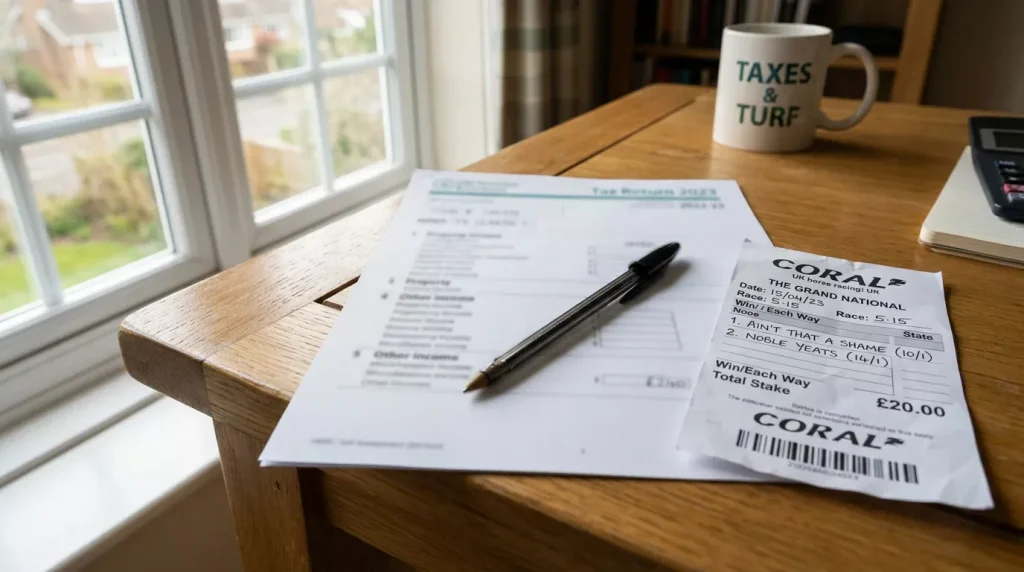
The Grand National remains the single biggest day for high-street shops. Once-a-year punters who would never download a betting app walk into their local bookmaker with a £5 note and a name picked from the newspaper. That tradition is alive, but it is increasingly a single-day phenomenon rather than evidence of ongoing relevance. For the other 364 days, the shop’s survival depends on the core regulars, and that core is ageing without obvious replacement.
Will betting shops still exist in 2036? Probably, but fewer and more concentrated. The shops that survive will be the ones in locations with strong footfall and loyal communities – town centres, working-class neighbourhoods, racecourse towns. The rest will follow the pattern of every other high-street retail format that lost its digital battle: slow contraction, occasional closures, and a final reckoning that feels sudden only because nobody was counting.
Articles
Created by the "Furlongcraft" editorial team.
