
Affordability Checks On UK Betting: What Triggers Them, What They Ask And What's Next
 Available in US
I had a mate ring me in March 2025, genuinely confused. He had deposited about £180 over a three-week stretch — nothing wild, mostly weekend racing — and his bookmaker had frozen his account pending a “financial vulnerability assessment.” He is a chartered surveyor who earns a comfortable living, has no debts, and has never gambled beyond his means. He was not angry. He was baffled. He kept saying, “I don’t understand what I’ve done wrong.” The answer, of course, is that he had done nothing wrong. He had simply crossed a threshold that did not exist six months earlier.
Since February 2025, any UK-licensed online bookmaker must run a light-touch financial risk check on any customer whose net deposits reach £150 within a rolling 30-day window. That threshold used to be £500. It dropped without much fanfare, and it caught a lot of casual punters off guard — people who bet £20 on a Saturday afternoon and had never thought of themselves as requiring regulatory scrutiny. This is the most significant change to the UK betting landscape in years, and whether you think it is essential consumer protection or bureaucratic overreach, it is now part of everyday betting life. This guide explains exactly how the system works, what triggers it, what you can expect if you are flagged, and what the wider consequences look like for racing and for the betting market itself.
Affordability Checks On UK Betting — More on this topic at horse racing betting how to .
Why Affordability Checks Exist
The first time I heard someone describe affordability checks as “the government trying to stop people having a flutter,” I knew the debate had already gone sideways. The checks are not about stopping anyone from betting. They are about identifying customers who might be betting money they cannot afford to lose — people in bankruptcy, on debt management plans, or showing spending patterns that suggest financial distress. The Gambling Commission’s stated aim is harm prevention, not prohibition.
Andrew Rhodes, Chief Executive of the UK Gambling Commission, described the light-touch checks as using “publicly available data to determine whether a customer is particularly financially vulnerable, such as in bankruptcy.” That is the official framing, and it is worth taking at face value before examining the criticisms. The data the Commission points to is real: problem gambling costs the NHS, local authorities, and the criminal justice system hundreds of millions of pounds each year. Operators have a licence condition to identify and protect vulnerable customers, and affordability checks are the mechanism chosen to meet that obligation.
The political backstory matters too. The previous Conservative government introduced the concept as part of the 2023 Gambling White Paper, despite pushback from racing bodies and the betting industry. The current Labour government inherited the framework and has shown no appetite for dismantling it. Whatever your politics, the direction of travel is clear: these checks are not going away. They may change shape, the thresholds may be adjusted, and the data sources may expand, but the principle of proactive financial screening is now embedded in the UK licensing regime.
Understanding that context is more useful than getting angry about it. The question for any punter in 2026 is not whether you agree with affordability checks. It is how they actually work, and what happens when you hit the threshold.
The £150 Threshold And How It Triggers
Let me clear up the single biggest misconception first. The £150 does not mean you cannot deposit more than £150 a month. It means that once your net deposits — deposits minus withdrawals — reach £150 within any rolling 30-day period, the operator is required to run a light-touch check. You can still bet. You can still deposit. The check happens in the background, and for most people, it resolves without them ever noticing.
The threshold dropped from £500 to £150 on 28 February 2025. That is a 70% reduction, and it brought millions of additional accounts into scope. A punter who deposits £50 a week and withdraws nothing will hit the threshold inside three weeks. Someone who deposits £200 for Cheltenham but withdraws £100 in winnings during the same window sits at £100 net and stays below the line. The calculation is not cumulative across your lifetime — it resets on a rolling basis, so your position changes daily as older deposits fall outside the 30-day window.
What triggers the check is the net deposit crossing the threshold, not any single transaction. If you deposit £200 on day one and withdraw £60 on day five, your net position is £140 — still below. If you then deposit another £20 on day ten, you are at £160 net, and the check triggers. The timing matters because operators calculate this in real time. There is no manual review, no human decision to flag your account. It is an automated system that fires the moment the arithmetic lands above £150.
This is worth repeating because I still see people on forums claiming they were “targeted” or “singled out.” You were not. Every single customer on every single UK-licensed platform is subject to the same calculation. The only variable is your own deposit and withdrawal pattern.
See also Betting On Britain’s Biggest Races .
What Data Gets Checked
A question I get asked constantly: “Do they look at my bank account?” No. Not at the light-touch stage. The light-touch check — the one triggered by the £150 threshold — uses publicly available or commercially available data. Think of it as a credit-reference-style lookup, not an audit of your finances.
The operator pulls data from sources like insolvency registers, county court judgments, the electoral roll, and credit reference agency markers. They are looking for specific red flags: active bankruptcy, an Individual Voluntary Arrangement, a Debt Relief Order, county court judgments for unpaid debts, or other markers of severe financial distress. If none of those flags appear, the check passes, your account stays open, and you carry on betting without interruption. Most punters never know it happened.
The data is not scraped from your social media, your employer, or your tax returns. It is the same pool of information that a landlord or a car finance company might access when checking your creditworthiness. The process is automated, and it typically completes in seconds. Your betting history with the operator is also considered — the system looks for patterns such as rapid loss-chasing, dramatic increases in stake size, or erratic deposit behaviour — but the core financial vulnerability check is about public records, not about how you spend your weekends.
There is a privacy concern here, and it is legitimate. Even if the data is publicly available, many punters are uncomfortable with the idea that placing a bet triggers a background check. That discomfort is understandable, and it drives much of the public resistance to the system. Whether it is proportionate is a separate argument, but the factual position is clear: the light-touch check does not access your bank statements, your payslips, or your employer records.
When Checks Become Enhanced
I spoke to a punter last year who had been through what the industry calls an “enhanced” affordability check, and his description sounded more like a mortgage application than anything to do with a Saturday accumulator. He had to provide three months of bank statements, a recent payslip, and a letter from his employer confirming his salary. The whole process took two weeks, during which his account was frozen.
Enhanced checks are a different animal from light-touch ones. They kick in at higher spending levels or when the light-touch check returns a flag that suggests potential vulnerability. The Gambling Commission does not publish a single universal threshold for enhanced checks — different operators interpret the guidance differently — but the general trigger is net losses or deposits significantly above what the light-touch data would suggest is affordable for someone with a given financial profile.
At this stage, the operator can and will ask for documents. Bank statements are the most common request. Payslips, P60s, tax returns, proof of savings, or evidence of other income may also be requested. The operator is trying to establish your disposable income — what you earn after tax, housing costs, and essential outgoings — and then assess whether your gambling activity fits within a reasonable proportion of that figure.
There is no standardised formula for what “reasonable” means. Some operators use 10% of disposable income as a ceiling; others are more conservative. The lack of a clear, industry-wide benchmark is one of the most criticised aspects of the system. Two punters with identical incomes and identical betting patterns can have completely different experiences depending on which operator they use. One might pass the enhanced check without issue; the other might have their stakes capped or their account restricted.
If you refuse to provide documents, the operator will typically restrict your account — either capping your deposits at a low level or suspending your ability to bet entirely. You are not obligated to hand over financial information, but the operator is not obligated to let you bet on their platform either. It is a contractual relationship, and the licence conditions give the operator both the right and the duty to restrict accounts where affordability cannot be established.
How Punters Are Responding
The racing community’s reaction has been fierce and, frankly, predictable. When you ask people who enjoy a perfectly legal activity to prove they can afford it, the response is going to be hostile. But the scale of that hostility is worth noting because it tells you something about how deeply these checks have cut.
In the Racing Post’s 2025 survey, 61% of bettors said they would refuse to provide financial documents if asked — down slightly from 66% in 2023, but still a clear majority. A separate survey by YouGov for the Betting and Gaming Council found that 65% of UK bettors would not share financial documents to continue betting. When a joint survey by the BHA, Racing TV, At The Races, and Racing Post asked a broader question, 52% of respondents said they would reduce or stop betting on racing entirely if checks were introduced at the level now in force.
Those are not fringe opinions. They represent the mainstream position of the betting public, and they present the Gambling Commission with a genuine dilemma. If half your customer base says they would rather stop than comply, and the purpose of the checks is to protect vulnerable people, you need to be very confident that the protection you are delivering is worth the participation you are losing. The Commission’s position is that it is. Many in the racing industry disagree.
What I find most telling is the gap between stated intent and actual behaviour. People say they will refuse documents, but many of those same people are still betting. They have either not hit the threshold, passed the light-touch check without knowing it, or grudgingly provided what was asked when the alternative was losing their account. The surveys capture sentiment, not action — and the sentiment is running hot enough to shape politics, media coverage, and industry lobbying for years to come.
The Cost To Racing
When I started covering this beat, I expected the affordability debate to stay in the regulatory lane — Gambling Commission versus operators, with punters caught in the middle. I did not expect it to become an existential question for British horse racing itself. But that is exactly what happened.
Total betting turnover on British racing fell 4.3% in 2025 compared to 2024, and 10.3% compared to 2023. That two-year decline is not explained by fewer races, fewer runners, or less interest from fans — racecourse attendance actually topped five million for the first time since 2019. The decline is concentrated in online betting, and it tracks almost perfectly with the tightening of affordability checks. The BHA’s own analysis is blunt: the shift towards high-profile fixtures is “undoubtedly linked to the impact of affordability checks,” with fewer large-staking customers, who have either stopped betting or moved elsewhere, “only partially replaced by more recreational punters betting in smaller stakes, primarily at the bigger meetings.”
The financial consequences for racing are not abstract. The Jockey Club estimates that affordability checks could cost the British racing industry up to £250 million over five years. The BHA has warned that up to 1,000 stable staff jobs are at risk if turnover continues to decline at the current rate. Prize money, which is funded partly through the Horserace Betting Levy and partly through racecourse revenues that depend on betting turnover, is under direct pressure. Lower turnover means a smaller levy pot, means less money for prize funds, means fewer owners willing to keep horses in training, means fewer races and fewer jobs.
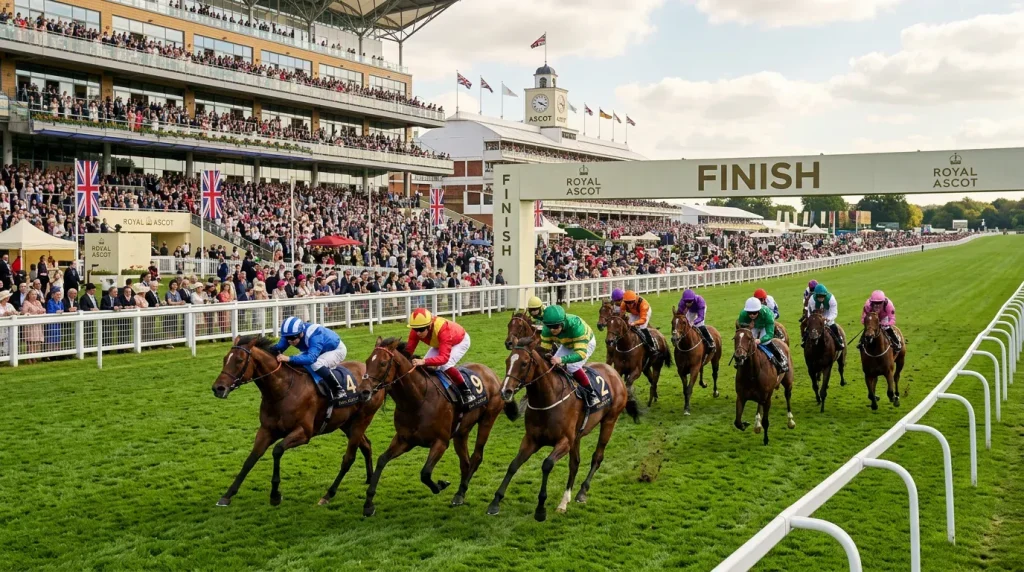
That chain of cause and effect is contested — the Gambling Commission argues that the decline has multiple causes and that attributing it primarily to affordability checks is misleading — but the racing industry’s position is clear and publicly documented. The core fixtures, the everyday bread-and-butter meetings that keep the sport running six days a week, are bearing the brunt. Premier fixtures like Cheltenham and Ascot are holding up because they attract recreational bettors who spend small amounts and rarely trigger checks. The weekday meetings at the mid-tier tracks, where turnover depends on a smaller number of regular, higher-staking punters, are the ones bleeding.
The Black Market Problem
Here is the part of the affordability debate that keeps regulators awake at night — or should. When you make regulated betting harder, some people do not stop betting. They move to operators who do not ask questions. And those operators are not licensed, not regulated, and not interested in protecting anyone.
The numbers are striking. In the Racing Post’s 2025 survey, 4.9% of respondents admitted to using unlicensed bookmakers, up from 3.6% in 2023. Nearly two-thirds of those who switched — 63.6% — named affordability checks as the main reason. Unique visits to unlicensed horse racing wagering sites from UK users rose by 522% between 2021 and 2024, a period that coincides exactly with the introduction and tightening of affordability measures.
Louie French, the Shadow Gambling Minister, warned in Parliament that regulations pushing the cost of legal betting too high risk driving participants out of the market altogether, undermining the very safety objectives the rules were designed to achieve. Grainne Hurst, Chief Executive of the Betting and Gaming Council, pointed to the Netherlands as a cautionary example: when slot taxes there rose to 34.2%, tax receipts fell, revenue dropped, and black-market play surged past 50%. Her argument — that pricing the regulated sector out of competitiveness pushes gambling into unregulated spaces rather than reducing it — is difficult to dismiss entirely, even if you support the principle of affordability screening.
The black market does not run affordability checks. It does not offer self-exclusion tools. It does not contribute to the Horserace Betting Levy. It does not pay UK tax. And it does not care whether its customers can afford to lose. Every punter who migrates from a licensed bookmaker to an unlicensed one is a punter who has lost every consumer protection the UK system provides. That is not a hypothetical risk. It is happening now, at measurable scale, and the trend line is pointing upward.
What To Do If Your Account Gets Flagged
I want to be practical here because the theoretical debate is one thing; getting an email from your bookmaker telling you your account is under review is another. Here is what actually happens and what your options are.
First, do not panic. A light-touch check flagging your account does not mean you are in trouble, under investigation, or suspected of wrongdoing. It means an automated system has found a marker that requires a second look. In most cases, the second look clears you, and your account is restored within hours or days. If the operator asks for documents, you have three realistic options.
Option one: provide the documents. If your financial situation is straightforward and you are comfortable sharing a payslip or bank statement, this is the fastest route back to normal betting. The operator reviews the information, confirms you are not financially vulnerable, and lifts any restrictions. Your data is held under GDPR protections and the operator’s data retention policy.
Option two: negotiate the scope. Some operators will accept less documentation than they initially request. A P60 instead of three months of bank statements, for example, or a letter from your accountant confirming your income bracket. It is worth asking, politely, whether there is a simpler way to satisfy the requirement. Not every operator will accommodate this, but enough do that it is worth trying.
Option three: walk away from that operator. You are not obliged to provide documents, and you are not banned from betting. You can open an account with a different bookmaker, and you will start fresh — though you will hit the same threshold again eventually. Nevin Truesdale, the former Chief Executive of The Jockey Club, captured the broader frustration when he said the Commission seemed intent on reducing gambling to small-stakes punters, calling it an infringement on personal freedoms while acknowledging that problem gambling “needs to be kept in proportion.”
What you should not do is assume that being flagged means your employer will find out, that it affects your credit score, or that it creates any kind of permanent record outside the operator’s own systems. The check uses credit reference data, but it is a soft search — the same type used for insurance quotes or identity verification. It does not appear on your credit file, and it is not visible to lenders, employers, or anyone else.
Where This Goes From Here
The Gambling Commission has signalled that the £150 threshold is not necessarily permanent. It was introduced as a calibrated starting point, and the Commission has committed to reviewing its effectiveness based on real-world data. Whether the threshold moves upward, downward, or stays the same will depend on the evidence gathered over the next 12 to 18 months — harm reduction outcomes, participation rates, black market trends, and industry financial performance.
What I expect — based on six years of watching this space — is that the threshold stays roughly where it is, but the mechanics of the check evolve. The Gambling Commission has been investing in data-sharing infrastructure that could allow for more sophisticated risk assessment using aggregated data across operators, rather than each bookmaker running its own isolated check. That would reduce false positives, speed up resolution times, and potentially allow for a higher threshold because the risk detection would be more accurate.
The racing industry is lobbying hard for a system that distinguishes between spending levels and spending patterns — the argument being that a regular punter who deposits £200 a month within a stable routine is fundamentally different from someone who deposits £200 in a single panicked session at 3am. That distinction does not exist in the current framework, and building it in would require a level of behavioural analysis that raises its own privacy concerns.
For punters, the practical advice is simple. Know the threshold. Track your net deposits roughly, even if your bookmaker does not show the number clearly. If you are flagged, respond calmly and promptly. And accept that this is now part of UK betting — not a temporary inconvenience, but a structural feature of the regulated market that will shape how you interact with bookmakers for the foreseeable future.
Articles
Created by the "Furlongcraft" editorial team.
