
All-Weather Racing: A Betting Lens On Polytrack And Tapeta
 Available in US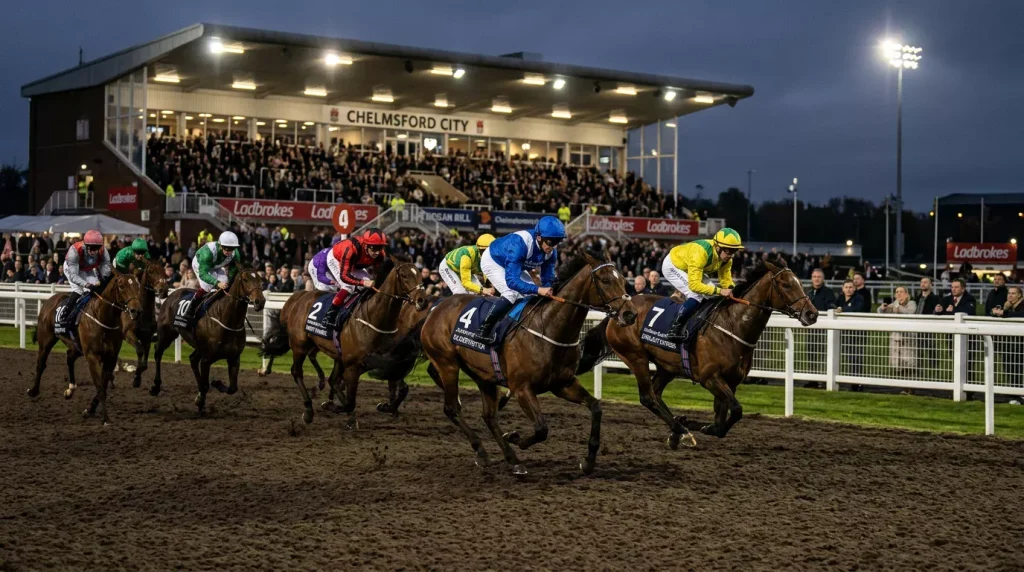
The Circuit That Never Sleeps
January, midweek, 4pm. The turf tracks are waterlogged, the jumps cards have been abandoned, and the Racing Post app shows exactly one meeting: Wolverhampton, floodlit, all-weather. I used to ignore these cards entirely. Then I noticed something odd – my strike rate on all-weather selections was consistently higher than on turf, not because I was smarter but because fewer people were paying attention. The all-weather circuit in Britain operates in a kind of permanent shadow, and for punters willing to step into it, that shadow hides value.
All-weather racing runs year-round at six dedicated tracks, providing a constant flow of betting opportunities when the turf season pauses. It accounts for a significant share of Flat runners – the average field size across all Flat racing sat at 8.9 in 2025 – and offers a consistency of conditions that turf can never match. No going changes, no ground-dependent non-runners, no clerk of the course walking the track at dawn. The surface is what it is.
All-Weather Racing — More on this topic at horse racing betting how to .
The Six All-Weather Tracks
Britain’s all-weather circuit comprises six venues, each with its own surface, configuration, and quirks. Chelmsford, Kempton, Lingfield, Newcastle, Southwell, and Wolverhampton – that’s the entire circuit. Knowing the differences between them isn’t a luxury; it’s a necessity.
Lingfield runs on Polytrack, a wax-coated surface that rides closer to good turf. Southwell used to race on Fibresand – a unique, demanding surface that suited front-runners and strong travellers – but has since switched to Tapeta. Newcastle and Wolverhampton both use Tapeta, a surface that tends to ride quicker and produces faster times. Chelmsford and Kempton are on Polytrack. Each surface handles rain differently, drains differently, and favours different running styles.
The configuration matters as much as the surface. Lingfield’s polyglot layout includes sharp bends and a short home straight that favours speed and a prominent racing position. Newcastle’s long, galloping oval with its wide sweeping turns gives hold-up horses time to close. Wolverhampton’s tight left-handed circuit with a short run-in is one of the most track-biased courses in Britain – drawn low is a significant advantage in sprints.
Surface Differences And What They Mean
The mistake most punters make with all-weather racing is treating all synthetic surfaces as one thing. They’re not. Polytrack and Tapeta produce genuinely different racing. Polytrack is slower, deeper, and more forgiving – it suits gallopers with a round action who can handle a degree of give underfoot. Tapeta is quicker, flatter, and rewards speed. A horse who excels on Polytrack at Lingfield won’t necessarily reproduce that form on Tapeta at Newcastle.
Going descriptions on all-weather surfaces run from Fast to Slow, with Standard as the neutral. Most cards are run on Standard or Standard to Fast. Unlike turf, where the going can change between races, all-weather surfaces are remarkably stable within a card. What does change is temperature – cold weather can make surfaces ride firmer and faster, while prolonged rain (even though synthetic surfaces drain well) can produce marginally slower times.
Horserace Betting Levy Board chief executive Alan Delmonte has highlighted that levy income has risen for a fourth consecutive period, but noted ongoing caution about sustainability given falling betting turnover. All-weather racing contributes to that levy through its year-round programme, and its consistent scheduling makes it a reliable source of betting activity even as turf turnover fluctuates seasonally.
Draw And Pace
Draw bias is more pronounced and more predictable on all-weather tracks than on turf. At Wolverhampton, low draws in sprints have a measurable advantage because the tight bend comes early and inside runners save ground. At Lingfield, the draw matters less over a mile but becomes significant in six-furlong sprints where the turn is sharp. At Newcastle, the wide, sweeping track dilutes draw bias considerably.
Pace is equally track-dependent. At Wolverhampton, front-runners and prominent racers dominate because the short straight gives closers no time to make up ground. At Newcastle, the long straight means a patient ride from behind is viable, and the best closers can pick up several lengths in the final two furlongs. Chelmsford’s straight mile eliminates draw bias entirely but introduces pure speed as the determining factor.
The practical lesson is simple: before you look at a single horse on an all-weather card, check the track, the distance, and the draw. Then establish who’s likely to lead. An all-weather selection process that skips these steps is guessing.
See also Exchange Vs Bookmaker .
All-Weather Form Cycles
All-weather specialists exist. Some horses run almost exclusively on synthetic surfaces, building their entire career around the winter circuit and the summer all-weather cards. These specialists develop track-specific records that are worth more than their overall form figures suggest.
The form cycle on all-weather is tighter than on turf because the same horses return to the same tracks more frequently. A horse who ran at Wolverhampton three weeks ago and finished third may well be back at Wolverhampton this Wednesday, off the same mark, against similar opposition. That repetition makes form more reliable but also makes it harder to find overlays – the market has seen the same form you have.
Where value emerges is in the cross-surface transition. A horse leaving turf for the all-weather for the first time, or returning to all-weather after a spell on grass, creates uncertainty that the market prices in conservatively. If you can identify horses whose turf form translates to synthetic – typically those with a low, efficient action and a preference for Flat racing on decent ground – you can find prices that overestimate the risk of the surface switch.
Betting Angles On All-Weather Cards
Racecourse attendance across Britain topped 5.031 million in 2025, the first time the figure exceeded 5 million since 2019. All-weather tracks contributed to that recovery, particularly through evening and winter fixtures that draw local crowds. But the betting dynamics at these meetings are distinct from the big turf festivals.
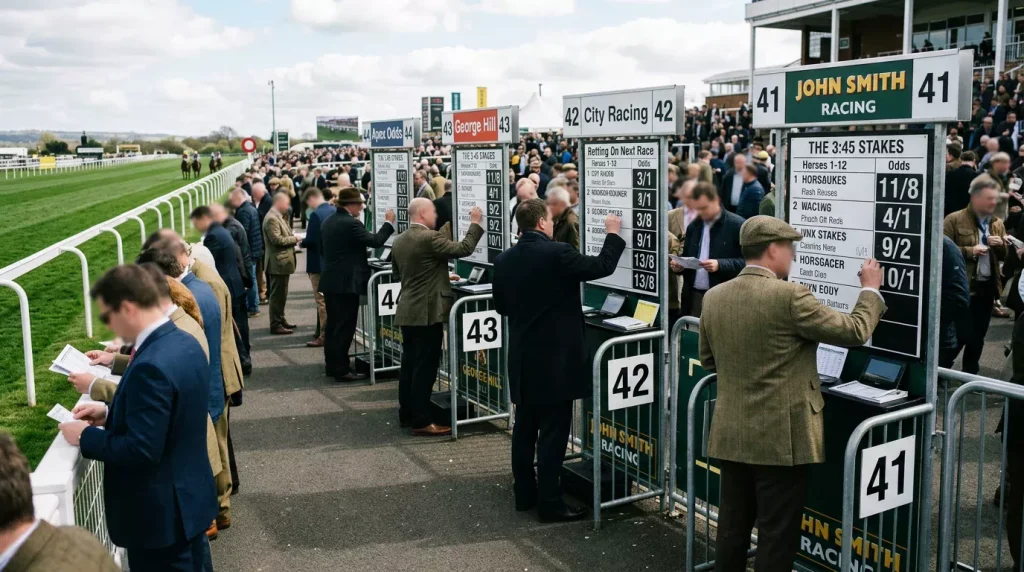
Markets on all-weather cards tend to be thinner. Exchange liquidity is lower, bookmaker spreads are wider, and the morning price often holds closer to the SP because the volume of late money is lighter. This means early value is easier to identify and harder to lose – prices don’t move as sharply as they do on a Saturday afternoon ITV card.
My strongest all-weather angle is the class-drop specialist: a horse who has been running in Class 3 or 4 on turf, hasn’t shown its best, and drops into a Class 5 or 6 all-weather race. If the horse has any previous all-weather form showing ability, the combination of class drop and surface switch can produce generous prices because most punters only see the recent turf defeats.
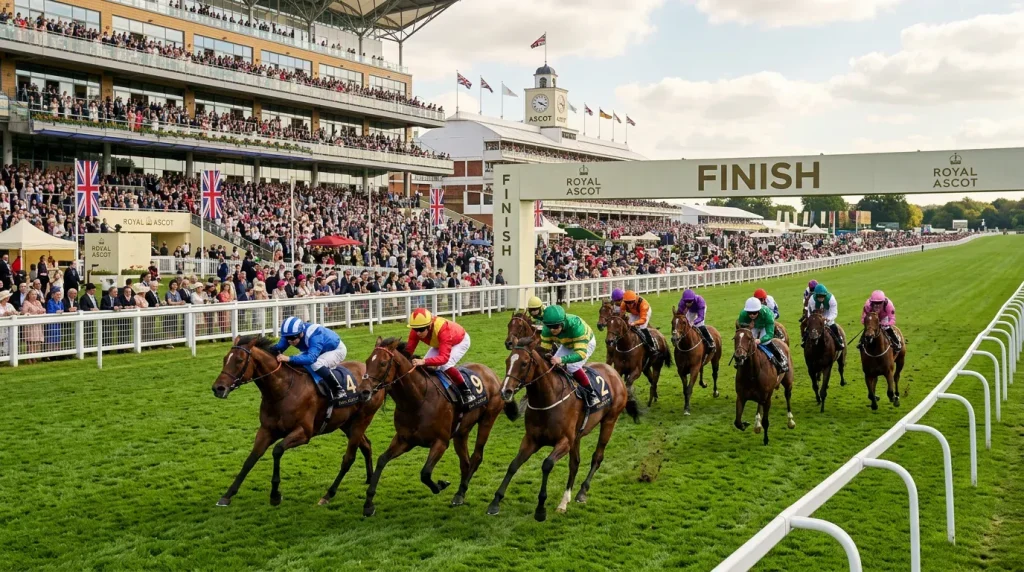
All-weather racing doesn’t carry the glamour of Royal Ascot or the atmosphere of Cheltenham, but it’s consistent, analysable, and – crucially – underbet. For the punter who treats it seriously, the floodlit circuit is one of the most rewarding corners of British racing.
Articles

Published by the Furlongcraft team.
